

“Make Yourself Indispensable”: GIS Graduate Explains How to Take Advantage of Internship Opportunities
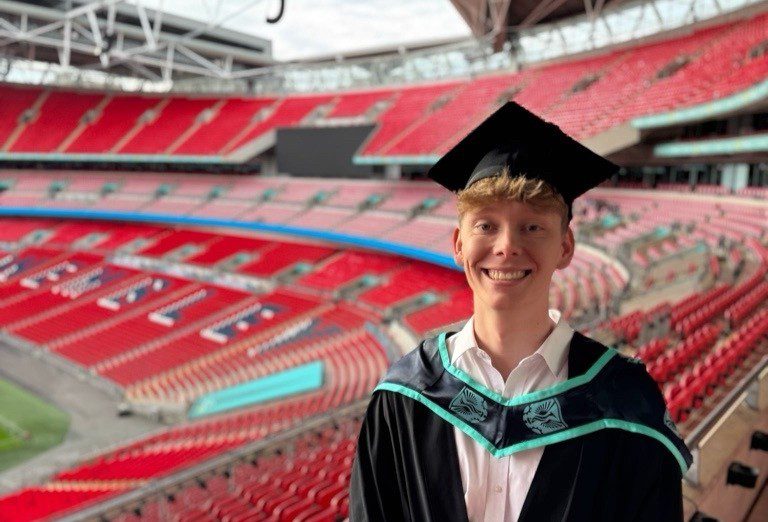
In the sports industry, aspiring professionals will hear time and again that practical experience is key.
Whether it be coaching, event management, or journalism, the ability to show an employer that you’re confident in the workplace is a significant bonus, and this proof can come from both previous roles or even your projects you’ve worked on yourself.
Internships are another great starting point, which GIS graduate Tobias van Deijck has learnt himself.
Having studied MSc Football Business with us part-time, Tobias’ internships, including at Eredivisie side Go Ahead Eagles and Miami Football Club, offered a way of getting his foot in the door of the sports industry.
Currently working as the Director of Academy Operations at USL Championship franchise Miami Football Club, he started at the club as an intern.
This was in 2024, when he was offered an internship as an Academy Administrator, and he explained to GIS just how seriously he took the experience.
“My advice would be to treat an internship like a full time job. Be dedicated and identify an area within the organisation that you can improve and add value to.
“Even if I wasn’t needed,” Tobias continued, “I was passionate and dedicated to learning and thus would find ways to help out or even just network and shadow—you’d be surprised how much more you will be exposed to when you show up even if you aren’t scheduled.”
It was through this proactivity that Tobias noticed the club hadn’t been organising any sponsorship deals for their academy. He took this as an opportunity to show how he could help the club, and began trying to fill that gap.
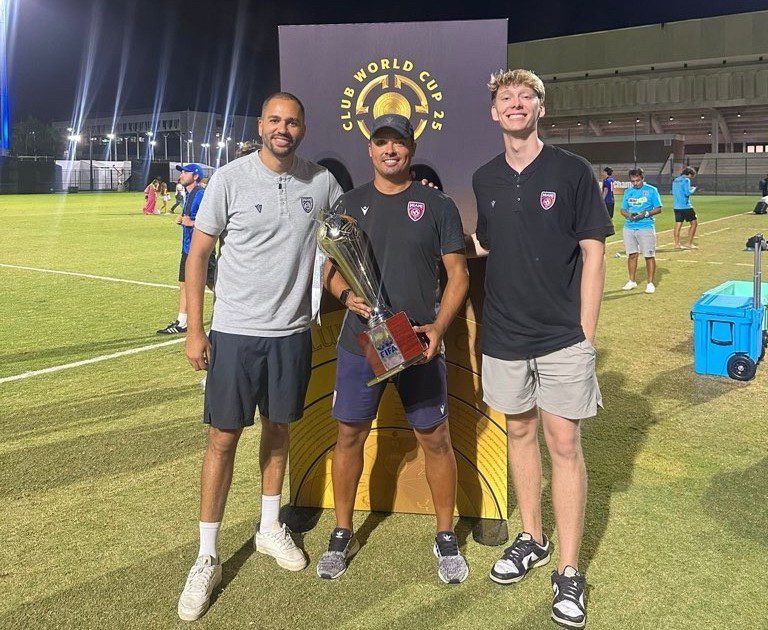
“The goal is to make yourself indispensable to the organisation so that at the end they have no choice but to hire you because they’ll view your contributions as value-adding (i.e, adding to revenue streams, improving operational efficiency, etc.)”
This approach worked, and he soon after began working for the club as Academy Operations Manager. He was only in this position for a matter of months however, before being offered the role of Director of Academy Operations that he is in today.
Running us through his responsibilities, he explained: “My day-to-day revolves around admin duties, such as player and team registration, finances and budgeting, field management for games and practices, and working closely with my operations team.”
Since he joined the club as an intern in 2024, Tobias tells us that the academy has nearly doubled in size, pointing towards his team’s efforts.
Studying at GIS, Tobias also credited his programme for providing him some of the insight he uses daily.
“When I was studying for my undergraduate degree, it was very difficult to find resources explaining fan engagement within football clubs, operations regarding match days, etc—GIS was able to bridge that gap and teach me about these topics, which are pivotal to obtaining a career.
“On top of that, the reports that you write in each class can be about any club or interest. For most of my reports, I wrote about Miami FC to find a solution to a certain problem that the club was facing. I also submitted it to my bosses, which has helped me professionally gain more credit from my employers and given me a better understanding of the USL and US landscape.”
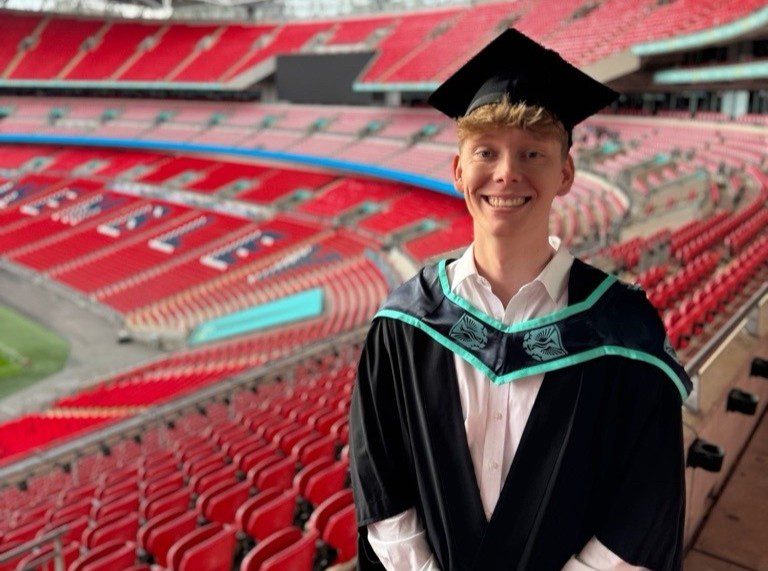
While studying, Tobias was his programme’s course representative, as well as the student ambassador at two GIS Miami Global Sports Summits, and he underlined the value of building genuine relationships during networking opportunities like ones at the summits.
“The highlight of my experience in Miami was meeting the speakers and individuals already established in the sports industry.
“One piece of advice I would give to students attending these events is to network with people and create relationships without asking for a job right away. Instead, have conversations by asking about what they do and what interests them, follow-up on LinkedIn after the event, and stay in touch with them every month.”
Other extracurricular activities Tobias completed include multiple football scouting and analysis qualifications and a course in artificial intelligence.
“If I can use AI correctly,” Tobias noted, “I will become more valuable and be able to survive in an organisation seeking those innovative, AI-skilled individuals.”
Tobias’ proactivity is one thing that employers in the sports industry look for, and education is another.
“Both directly, through otherwise unobtainable information, and indirectly, via personal application to my professional career path, GIS has thus been able to give a solid foundation, propelling me forward in the industry,” Tobias concluded.
Discover more about the MSc Football Business degree Tobias studied, or view our course offerings to find the perfect programme for you to get started in the exciting sports industry.
Article by Zakaria Anani


You may also be interested in

Latest news
August 22, 2025 |
Meet Your Future Lecturers: Dr Alexander Chrysanthou
Read Post
Latest news
June 1, 2026 |
Modern NCAA Explained: Eligibility, Transfers, NIL and Conference Realignment
Read Post
Latest news
September 29, 2025 |
How does Promotion and Relegation Work Around the World?
Read Post
Our Partners