

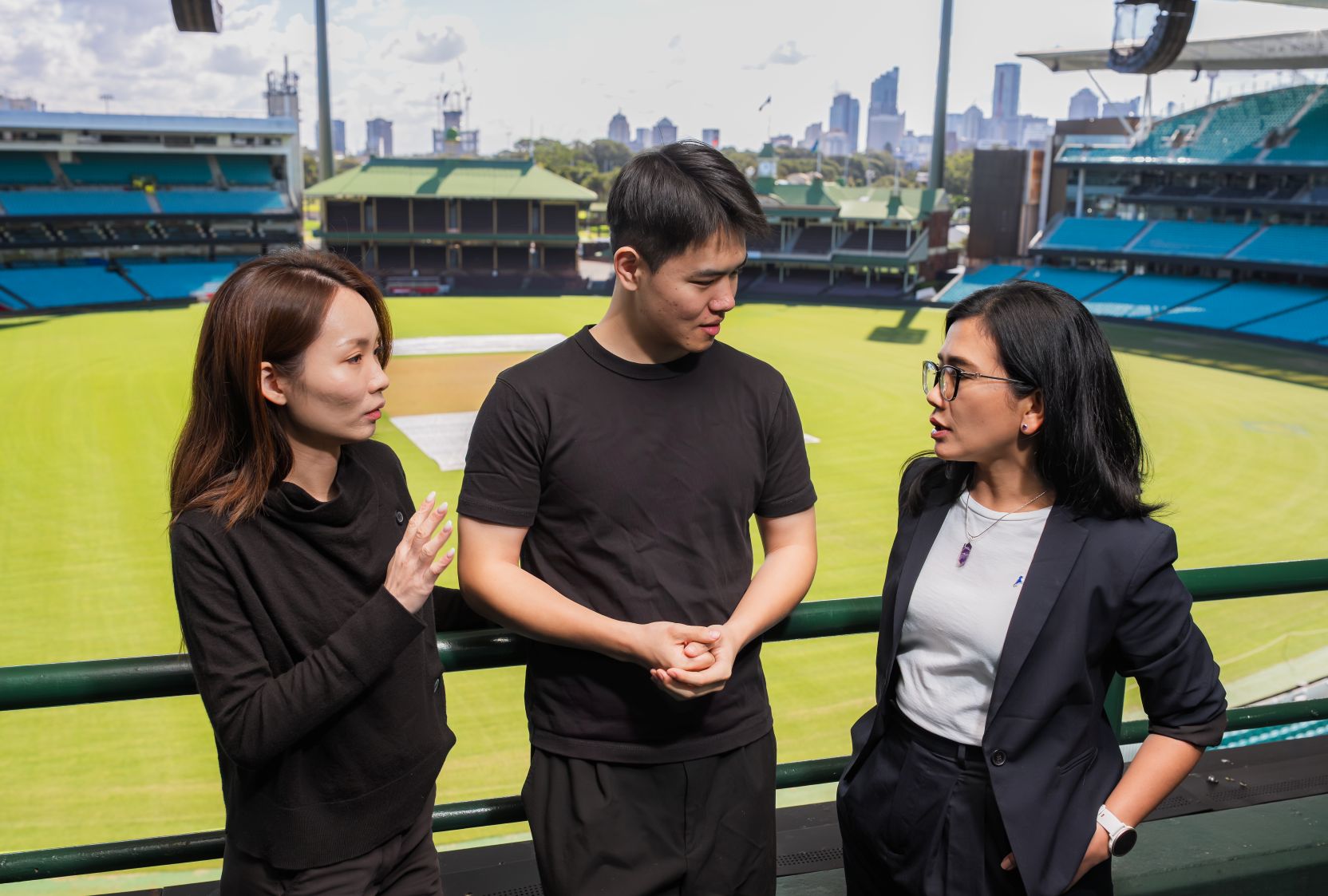

MSc Football Business and Leadership is designed to develop the next generation of global leaders in the global football industry. Combining real-world experience with academic insights, you’ll explore how modern football clubs and organisations operate, while gaining the skills needed to succeed in a high-performance environment.

Course Information
Start Dates:
January, SeptemberDuration:
1-year full-time or 2-years part-time
Course Overview
MSc Football Business and Leadership aims to develop ambitious football industry professionals into the next generation of global leaders in the football industry. Blending academic excellence with real-world knowledge, this course explores the inner workings of modern football clubs and organisations, including leadership, strategy, operations, media relations and more. You will be equipped with a deep understanding of how the beautiful game works from the very top.
Designed for students aspiring to secure roles across clubs, leagues and governing bodies. This programme will build the strategic, commercial and leadership skills needed to thrive. With a strong focus on innovation, trends and real-world practices, you will graduate with the confidence, insight and practical experience to lead and influence the global football industry.



Course Content
MSc Football Business and Leadership is built around developing the ability to lead. You’ll learn how to analyse and evaluate behaviour, strategies and operational and organisational performance. Equipping you to critically examine leadership, culture and management with organisations, you’ll gain the tools to identify challenges and then implement effective organisational change.
You’ll develop practical skills through applied projects, how to use data and metrics to measure organisational success, evaluate physical and digital touchpoints in fan engagement and make informed business decisions. With a strong emphasis on critical thinking skills and self-reflection, this programme will enable you to graduate with the ability to make an impact across the beautiful game.
This programme is taught entirely in English.
Teaching Location
Study a degree from anywhere in the world, with flexible learning options to suit your schedule. With GIS, you’ll unlock access to a global network of students, alumni and industry professionals to maximise your opportunities and excel in the most exciting industry in the world.

Modules
Students studying on UEL-awarded programmes are subject to UEL’s academic regulations. These set out the rules for academic matters such as assessment, marking, progression, reassessment, academic misconduct and appeals. The regulations are available on the UEL website.
This module explores the evolving landscape of football fan engagement within the global sports industry. It offers a critical examination of how football organisations cultivate, maintain, and measure relationships with fans across multiple touchpoints, using both traditional and emerging strategies. Beginning with an introduction to fan culture and the historical context of sports marketing, the module then progresses through key themes including fan behaviour, segmentation, and match-day experience. Students engage with contemporary challenges and opportunities in digital fan engagement, including the use of social media, websites, apps, and email campaigns. Globalisation and inclusivity are central themes, as students explore how cultural differences, identity, and accessibility shape engagement. The module further investigates the role of community engagement, supporter groups, and reputation management. Students also examine metrics that matter—KPIs, CRM systems, and data analytics—to assess the effectiveness and ROI of engagement strategies. In the final weeks, the module turns toward the future of fan engagement, introducing innovations such as AR/VR, AI, NFTs, and gamification.
In this module you will appraise operations management principles in the wider football industry. The module will cover a broad selection of topics including, but not limited to, stadium technology, multi-use stadium operations, matchday experience, stadium capacity calculations, sustainable development policies, football facility financial management, event management principles and community engagement.
The aim of this module is to assess multiple approaches of operations management for football organisations and football facilities. You will be introduced to academic theories which will be related to case studies from the global football industry. You will be expected to critically explore academic theories, governance regulations, and industry practices related to the content of this module.
The module will help you to explore, interpret and apply operations management principles and consolidate these into long-term strategies for a football organisation.
This module explores the key components that contribute to the creation and maintenance of high-performance clubs and organisations, with a particular focus on football and team-based environments. Participants will critically examine the characteristics of high-performing environments and the strategies used to build and sustain them.
The module begins by defining what constitutes a high-performance organization and explores the aims and objectives that guide their development. Students will investigate organisational politics, leadership approaches, and strategic planning as tools to drive performance both on and off the pitch.
A significant focus is placed on organisational culture including values, beliefs, and behaviors and how culture is developed and embedded over time. The module also examines the role of talent management in nurturing both individual and collective potential within the organisation. By the end of the module, learners will understand how to design, implement, and sustain high-performance environments that achieve success in all areas of operation.
This module provides an opportunity to undertake an applied professional project that bridges academic learning with real-world practice in the sports industry. It is designed to enhance your professional skills, critical thinking, and problem-solving abilities by engaging with a current issue or challenge within a sporting context.
You will take ownership of a sustained, independent project that draws on the knowledge, competencies, and experiences developed throughout your programme. Working within a live or simulated sports environment, you will apply theoretical understanding to practice, with the aim of generating meaningful insights or solutions that have direct relevance to coaching and performance, or sports business and management, marketing or media.
The module fosters experiential learning by encouraging reflection on your personal development and professional impact. Through this process, you will demonstrate leadership, initiative, and the ability to manage and deliver a project from conception to completion, all of which are highly valued by employers in the sport sector.
Your chosen project will allow you to explore an area of personal or professional interest, showcasing your ability to integrate academic knowledge with industry practice. By presenting your findings and outcomes, you will contribute to the enhancement of professional standards and demonstrate your readiness to influence and improve sporting environments.
Successful media relations and solid communication strategies are vital for all sport organisations. Media managers must understand how the media works and have a toolbox of skills to be able to manage and deliver successful communications. Media managers who combine strategic planning, relationship building, creative thinking and outstanding organisational skills – and who have the ability to work under pressure – can help navigate clients through the trials and potential pitfalls of a career in sports media, as well as maintaining and enhancing the brand image of an organisation through effective communications. An effective media manager should possess a keen interest in shaping the brand image and reputation of individuals and organisations through insightful and powerful communications, and be able to not only cope in a crisis situation, but have the ability to develop a strategy that can mitigate reputational damage and rebuild the client’s corporate and social identity.
This module explores how sports organisations develop and manage effective global strategies in an increasingly complex and competitive environment. Students will analyse the macroenvironment (e.g., economic, political, and cultural forces) and the microenvironment (e.g., industry dynamics and stakeholder relationships) to understand external influences on strategic decision-making. Core topics include business and corporate strategy, focusing on how organisations position themselves competitively and manage multi-level operations. The module also examines international strategy, with an emphasis on global expansion, market entry, and adaptation. Students will explore the role of entrepreneurship and innovation in driving growth, particularly through digital disruption and emerging trends in sport. Strategic growth through mergers, acquisitions, and alliances is evaluated alongside the broader strategy development process, from formulation to execution. Finally, the module addresses how to organise and evaluate strategy, and the critical role of leadership, governance, and strategic change in ensuring long-term success in global sports organisations.
Meet your
Course Leader
Jarno Stegerman
Jarno Stegeman is a senior lecturer at the Global Institute of Sport specialising in event safety, sustainability, and legacy. He holds an MSc in Business Economics and a PGCert in Teaching & Learning in Higher Education.

Entry Requirements
- Undergraduate degree – minimum 2:2 (ideally a 2:1) or international equivalent.
- Applicants should demonstrate any experience and a passion for sport in their personal statement.
- English Language Requirements: if you’re applying from a country where English is not the majority spoken language, you’ll need to demonstrate your English proficiency. We accept a range of internationally recognised qualifications, with the minimum standard being: IELTS score of 6.5 overall, with no individual component below 6.0, or an equivalent. Accepted qualifications include: IELTS Academic, IELTS for UKVI, TOEFL iBT, Oxford ELLT, PTE Academic, Cambridge IGCSE, ESOL, and IESOL.
- Oxford ELLT is fast, online English Language Level Test, preferred by Global Institute of Sport that can be used as evidence of a candidate’s English language proficiency for international admissions. Visit https://oxfordellt.com/ellt/.
- We require a minimum ELLT score of 7, with at least 6 in each individual component.
Offers to applicants currently studying an undergraduate degree will be conditional on them going on to achieve the entry requirements on completion of their degree.
Applications that do not meet the standard entry requirements but demonstrate relevant education and/or work and/or life experience in the course subject area are welcomed.
Eligibility will be assessed on the basis of the information provided in the application – in particular the personal statement.
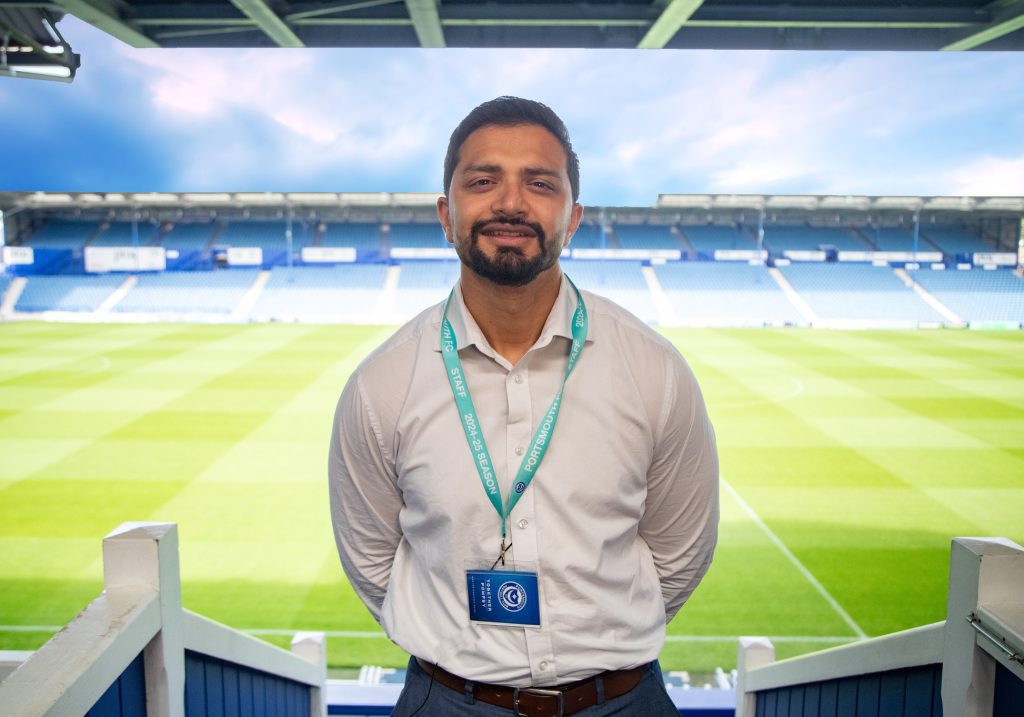
Rohan Shukla
GIS graduate
Partnerships Manager, West Ham United
Scholarships
The Global Institute of Sport is proud to offer an extensive suite of scholarships to support outstanding students as they embark on their postgraduate study. From scholarships to aid our elite athletes, to attracting aspiring sports leaders, and scholarships which support inclusivity and diversity within the sporting industry, our scholarships are there to support students who want to make a meaningful difference to the future of the sporting world.

Career Prospects
Our students and alumni are leading the way for the future of the sports industry, working at leading names including Premier League clubs, national governing bodies and internationally acclaimed organisations.
Each course at GIS has been designed with the global sports industry in mind to ensure each student gains the skills required to give them every opportunity for success. Across the industry, GIS students and graduates are leading the way in a variety of sectors including coaching, business, media, marketing and events.

Fees
These fees are for the 2026/27 academic year and are subject to annual review.
Find out more about your funding and finance options.
Students studying on UEL-awarded programmes pay their tuition fees to the University of East London, not to GIS. UEL’s Student Fees Policy explains how tuition fees are charged and administered, including payment, fee liability and refund arrangements. The policy is available on the UEL website.
These discounts are open to any GIS, UCFB, Vrije Universiteit Brussel and University of East London graduate who has received and accepted an offer to study at the Global Institute of Sport.
15% fee tuition discount on all Master’s programmes.
- IT Devices – Students are expected to have access to a laptop or computer from which they can access recorded content or live sessions. The device(s) used should be capable of streaming video content, accessing documents and using the internet. Students will be expected to have access to a stable internet connection, particularly for live session access. Students who study on finance modules would also require a calculator or app. If you are unsure as to whether or not your device is suitable, please contact assistance@gis.sport for advice.
- Books and Materials – When designing our courses, we make use of learning resources and books available to you through the UEL Library – you do not need to purchase, rent or pay for additional materials in order to meet the learning outcomes of the programmes.
- In person events – As an online institution, many of our events are held online and can be accessed with suitable IT Devices (see above). Where events are held in-person at one of our locations, they are entirely optional and attendance will not be required in order to complete the programme. Additional costs of any such events will be published with the event information.
- Graduation – Students who wish to attend any graduation or celebration events at GIS may need to pay an event attendance fee to secure their tickets or pay third party vendors for photos and attire. These events are optional and attendance is not required in order to receive an award. The costs of attending these events will be published when announced.
- Resits & Retakes – A resit is a second attempt to pass an assessment where the first attempt has been failed or not attempted. Where students are entitled to an assessment resit, this opportunity will not come at an additional cost. Where a student is required to retake failed module(s), in order to progress with their course, a ‘retake’ is an additional attempt to undertake the module(s) in full, engaging in the module(s) teaching learning and assessment as a student from the start. Under UEL regulations, students are required to pay for the retake in full, based on the fees quoted in your offer letter.
- Certificates and Transcripts – Students receive one free copy of their final certificate and transcript. If a student requires additional or replacement copies for any reason, UEL may charge a fee in line with its published arrangements.
Study on campus in Sydney, Miami, Toronto or Brussels




Looking to study on-campus in the UK?
Check out our partners University of East London (UEL) for more information.