

What Is the Real Impact of Hosting a World Cup on Cities and Communities?
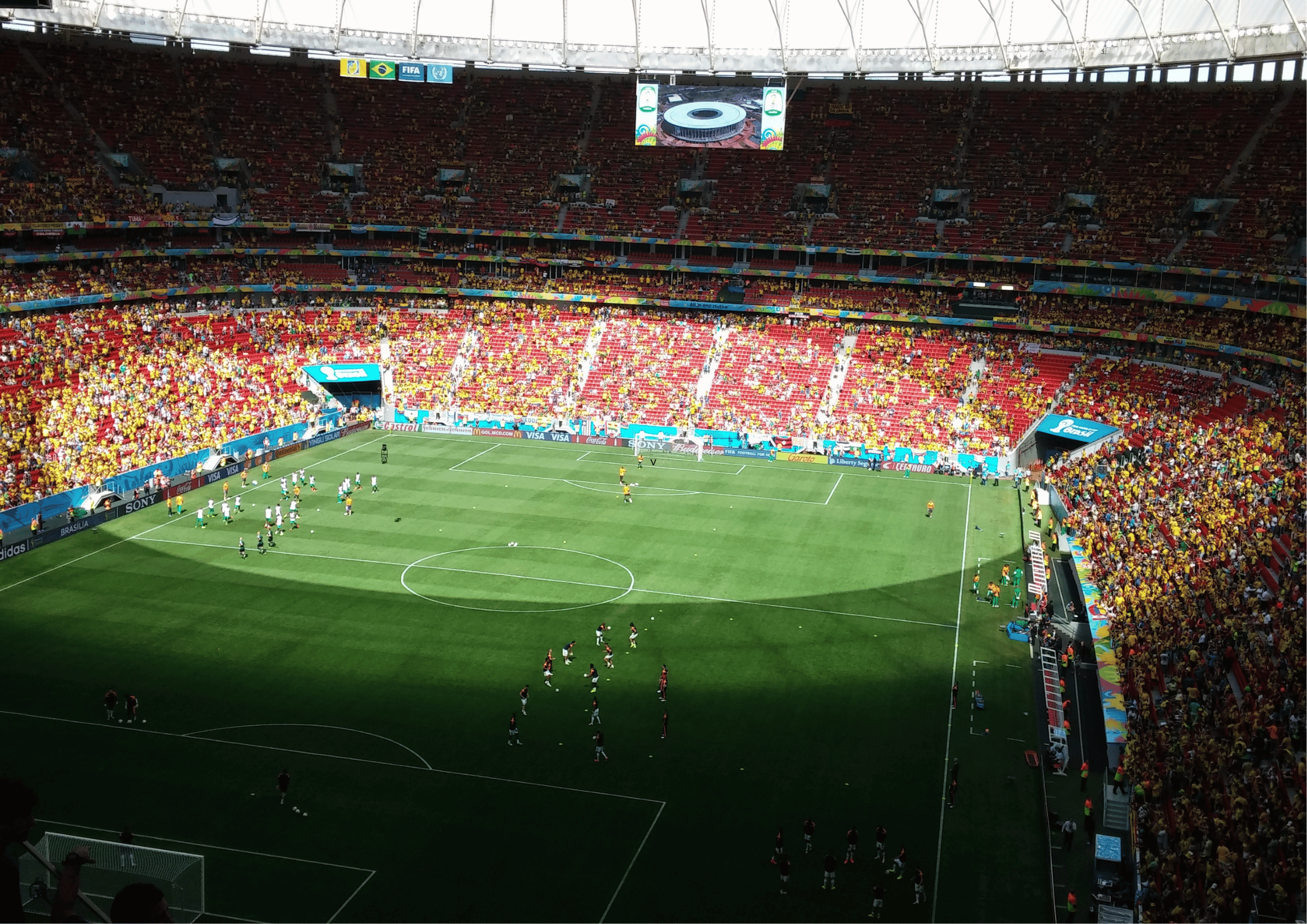
A bid to host the World Cup is a declaration of intent: the nation feels ready to have the world’s eyes on it. Winning the bid is a further accomplishment, and hosting the tournament becomes the focus of the country as a whole with impacts on economics and politics as well as sport.
The ‘shop-window effect’ and a ‘tourism boost’ are phrases that are commonly paired with the positive effects of a sporting mega-event (SME) on a host city. While somewhat true, with visitors spending more on average when the primary reason for visiting is football, overall tourist numbers can remain the same. Beyond finances, the impact of hosting a World Cup on a host city is complex, stretching from legacy planning to social issues.
This article will explore the real impact of a World Cup on the host city and its communities, using two case studies to showcase how different the outcome can be.
Paris: 1998 World Cup
The 1998 World Cup in France saw the host nation lift the trophy after beating Brazil 3-0 in the final. The game was played at the Stade de France in the northern Parisian suburb of Saint-Denis, and is a strong example of a widely successful tournament when it comes to one of the host cities.
A key part of the nation’s bid to host the World Cup, the construction of the Stade de France made it the largest in the country. The intention was to make the stadium the home of the French national team following the tournament, a plan that has been stuck to, preventing it from becoming one of the white elephant venues that plagued tournaments in the past.
A historically poor suburb, the construction of the stadium brought with it significant transport upgrades such as the extension of the Paris metro to Saint-Denis, overall resulting in significant investment in the area. This is still evident today, as the stadium remains home to the national team as well as hosting other major sporting events.
Further towards the city’s centre is the Parc des Princes, which was also used for the tournament. Home of Paris Saint-Germain, the stadium highlights the benefits of the tournament on the city, as its use avoided some of the high costs that can be unpopular with locals (the stadium had already been rebuilt in 1972.) The use of pre-existing stadiums like this contributed to the relatively low overall cost of the tournament, which was around $2.3 billion, a lower expenditure than any tournament since.
Crucially, Paris aligned its World Cup investment with long-term usage needs rather than short-term spectacle. However, the 1998 World Cup’s largest success on Paris was its social impact. Made even clearer by France winning the tournament, the tournament led to a significant feeling of unity, highlighted by scenes of a triumphant Champs-Élysées. Former France and PSG manager, Gerard Houllier, wrote that hosting the tournament helped “reveal a lost, or at least half-hidden, national identity. Football generated an unbelievable feeling of identification with France’s national flag.”
This included a particular upturn in social cohesion, where the multiracial national team helped the nation celebrate its diversity. Cultural Counsellor of the French Embassy in London at the time, Olivier Poivre D’Arvor stated: “The image of a racist country was being popularised beyond our frontiers. The night of 12 July, for the first time in a long while, I could breathe more easily.”
Rio de Janeiro: 2014 World Cup
A host of the 2007 Pan American Games, 2014 World Cup and 2016 Olympics, Rio de Janeiro was a city driven by sport for a significant period of time.
To prepare for these events, over a dozen venues were constructed, as well as the completion of major renovations to pre-existing stadiums including the iconic Maracanã, the largest host stadium at the tournament.
As part of the uncontested nature of the 2014 World Cup bid, Brazil’s Local Organising Committee (LOC) believed it had an opportunity to focus on making the bid as appealing as possible to the government and the public. In their Inspection Report ahead of the tournament, they stated: “The inspection team was able to see first-hand the desire and willingness of all groups to come together for the successful staging of the event.”
As a leading footballing nation, it is hard to imagine that citizens of Rio de Janeiro didn’t want to host the sport’s largest competition. However, protests against the competition took place in the leadup to the tournament, with many of the public arguing that the money spent on the USD 15 billion spent on hosting the competition could have been used elsewhere.
The tournament’s legacy was, in return, the state’s main counterargument, with the LOC Inspection Report stating that the SME would “stimulate investment in transport and accommodation infrastructure and will bring many outdated football facilities up-to-date.”
After the tournament ended, the lasting effects of these improvements varied. Transport was indeed improved, with various road, rail, and cable car infrastructure undergoing significant investment that remained available for use after the tournament. The football facilities, however, often fell into disuse, and unlike Paris, Rio de Janeiro’s investment failed to prioritise sustainability.
This was particularly true for stadiums, which after later use in the 2016 Olympics, became ‘White Elephants’, a term for venues that are underutilised after the event they were built for. In contrast, all of the stadiums that hosted games during the 1998 World Cup are still used today.
Social issues also exemplified some of the costs that can come with hosting a World Cup, where even the aforementioned transport upgrades came at a cost. It has been reported that thousands of favela residents were evicted from their homes and relocated to the outskirts of the city to make way for infrastructure related to the tournament.
Overall, this is not to say that hosting an SME is inherently bad for the host city and its communities, however, it is clear that significant planning is vital, particularly to avoid the ‘Mega-Event Syndrome’ often associated with tournaments, where legacies are overpromised and costs are underestimated.
Instead, an actionable legacy that reduces economic cost and encourages social cohesion such as that in Paris is key, and can help ensure a host city and its communities benefit long-term from the significant investment it puts into a World Cup.
Article by Zakaria Anani


You may also be interested in



Our Partners