

Meet GIS Student Christopher Butler, Lead Academy Goalkeeping Coach at West Bromwich Albion
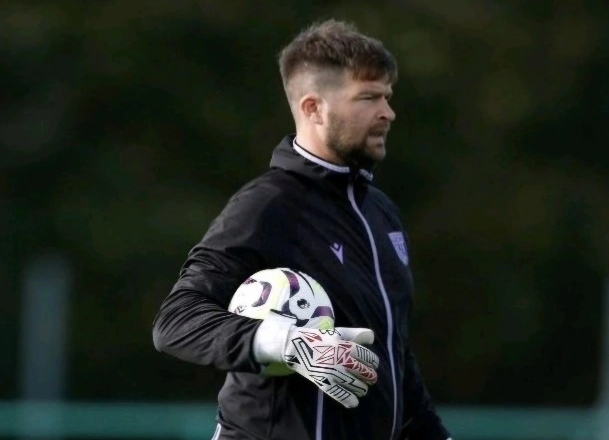
Working as Lead Academy Goalkeeping Coach at West Bromwich Albion, GIS student Christopher Butler has spoken to us about his role, including why he chose to specialise in goalkeeping, what it’s like preparing academy players for life outside football, and more his advice for aspiring coaches.
An MSc Football Coaching & Analysis student, Christopher has been at West Brom since 2023, having moved to the club from his previous role at Wolverhampton Wanderers.
His career as a goalkeeping coach, however, reaches back over a decade to his time at Wycombe Wanderers, a team he joined in 2011. Since then, Christopher has held multiple roles training the next generation of goalkeepers, a specialism that stems from his days as a player.
“I always aspired to break through but often fell short,” he began.
“As I got older, I developed a desire to help others achieve their dreams, which ultimately led me into coaching. Given my background as a goalkeeper, specialising in goalkeeper coaching felt like a natural pathway.”
Working under the Head of Academy Goalkeeping, Christopher’s work as part of West Brom’s academy set-up highlights the importance of position-specific training. “Goalkeeping is certainly no exception,” he explained, a position which comes under increased scrutiny as the last line of defence.
“Psychological development is crucial because when a goalkeeper concedes, all eyes are often on them. The challenge is helping them cope with and thrive under these pressures. This is where close collaboration with psychology departments becomes important in creating development tools that support performance under pressure.”
Physically, the demands placed on goalkeepers are different too, as part of a position that is one of the most competitive in football. Overall, Christopher added that less than 1% of players reach the professional level, a number that drops when it comes to goalkeeping.
“As a result, a key part of my role is preparing players for life outside the game. I see coaches as teachers, supporting not only physical development but also personal growth, maturity, and the development of life skills that extend beyond football.
“Statistically, it is more likely that at some stage I will have to tell a player that their journey cannot continue. That is one of the most difficult aspects of coaching in an academy system.”
This is not to say that Christopher hasn’t had his fair share of success stories. “Across 16 years of coaching,” he continued, “I have seen many players progress into the Championship, League One, League Two, and non-league football.
“I’m humble enough to know that I only played a small part in those successes, but it was enough for me to feel proud of their achievements and grateful to have contributed to their journey. Their shirts hang in my house as reminders of what it takes to become a professional goalkeeper and continue to motivate me to help create the next success story.”
Possessing a UEFA A Goalkeeping Licence as part of his extensive list of qualifications, Christopher joined GIS in 2024 as a part-time student. Discussing his studies, he detailed how he’s been able to implement his learnings on the pitch.
“The programme has been brilliant for me. It has allowed me to use the modules and learning processes to generate new ideas and rethink my approach to development. I constantly ask myself: How can I use this course to further support the players I coach?
“Given the programme’s strong focus on analysis, it has enabled me to create new learning tools through performance analysis while also strengthening working relationships with our analysis team. It has encouraged me to think more deeply about my future and how I can continue to make a greater impact both on and off the grass.”
Holding a role that many coaching students would aspire to have, we then asked Christopher for one piece of advice for them.
“My advice to aspiring coaches would be to assess their interests and strengths carefully.
“If you have ambitions to work in a youth development environment, identify where your expertise lies. Is it coaching, strength and conditioning, or data analysis? Establishing this baseline provides a platform for growth. Football offers many different pathways, so understanding what you’re good at and how you can maximise those strengths is key.”
Coaches will know that all academy players dream of playing at the highest level. Regardless of whether this comes to fruition, preparing them for every scenario, Christopher concludes, is ultimately the most important.
“If you can provide goalkeepers with an incredible experience and equip them with the tools to succeed both on and off the pitch, then I believe that is what truly makes a good coach.”


You may also be interested in



Our Partners