

Meet Your Lecturers: Jono McPhail on Developing Modern Coaches
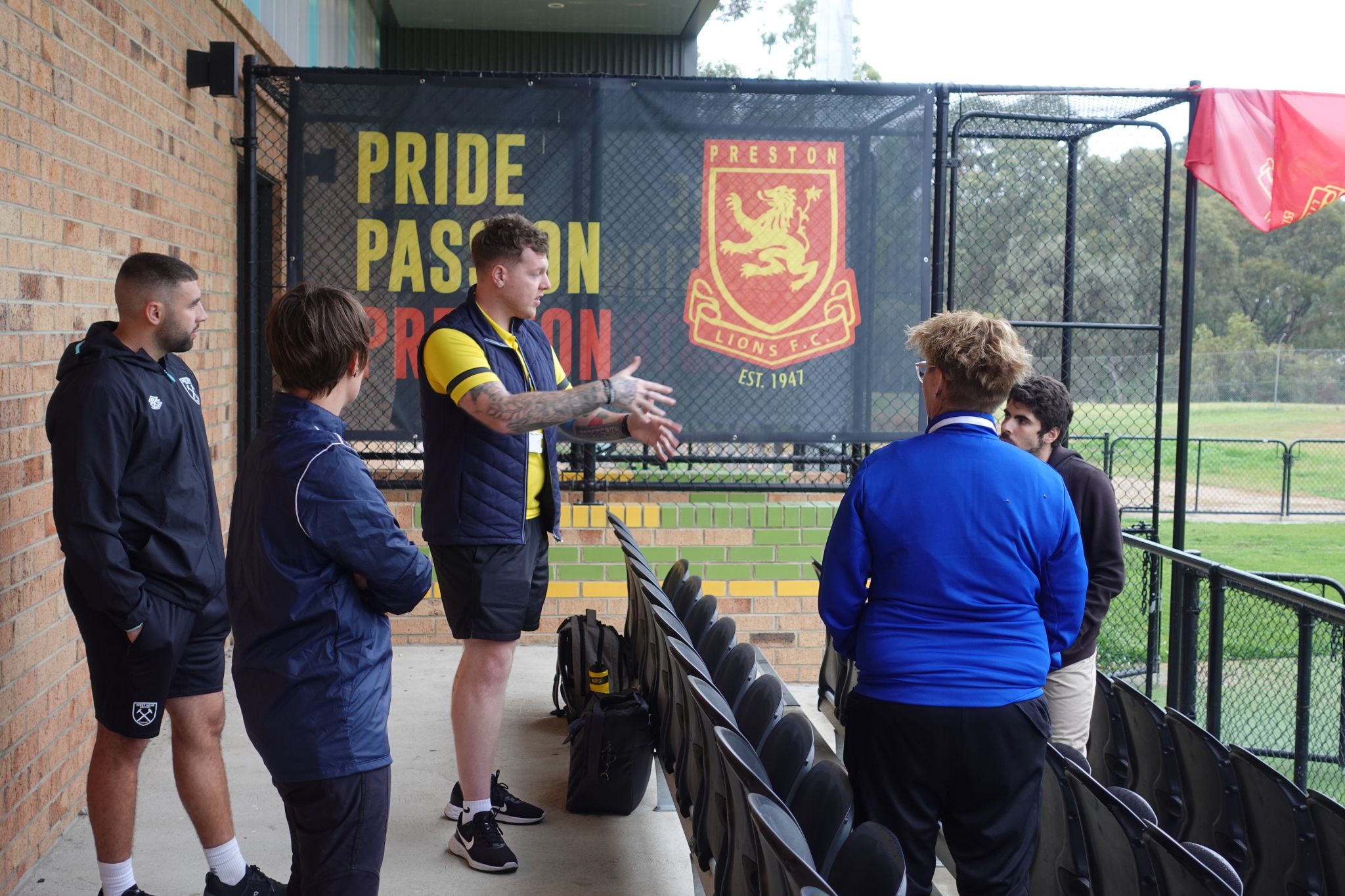
As Deputy Dean of the School of Coaching & Performance at Global Institute of Sport, Jono McPhail combines his academic expertise with practical coaching experience to support the next generation of football coaches.
Having previously coached in English academy football at Morecambe and overseas in the US, Jono remains active in the industry and is completing a PhD exploring coaching philosophy.
In this Q&A edition of GIS’ Meet Your Lecturers series, we caught up with Jono to discuss his career journey, what influences him as a lecturer, and what aspiring coaches can gain from studying with GIS.
As well as your experience on the pitch, you have extensive academic expertise. How does this improve you as a lecturer and coach, and what’s the value of that to the students?
To best understand coaching from an academic perspective, you should do it in industry as well. Then it’s vice versa, to understand it from an industry perspective, you need academic underpinning.
As an academic also doing an academic programme, it means that I’m still in touch with that process of being an academic. I’m still a student at the same time as being a tutor.
You’re always talking about lifelong learning and reflective practice and it’s the same as in coaching, you’re always looking at this lifelong learning process and this continuous engagement with CPD.
The PhD for me is a bit of that, it’s getting a qualification that recognises me to be at a higher level than what I’m currently at now, and I’m continuously applying academic processes and policy.
When students are then being challenged with deadlines or they’re finding research that’s particularly interesting, I know what it’s like.
My PhD is centred around coaching philosophy, and the module that I deliver at GIS is on the same subject. So all of the literature that I’m reading as part of the PhD, all of the data that I’m handling, can then be discussed as part of the module.
The vast majority of content out there is centred around a few core papers, and one of my PhD supervisors actually put together quite an important piece in the field.
The main benefit for me is that I’m actively learning in a space that I’m teaching. That’s important because papers come out every year, every month, that might be relevant to that teaching process, so I’m quite contemporary in terms of the ideas that I’m sharing with students.
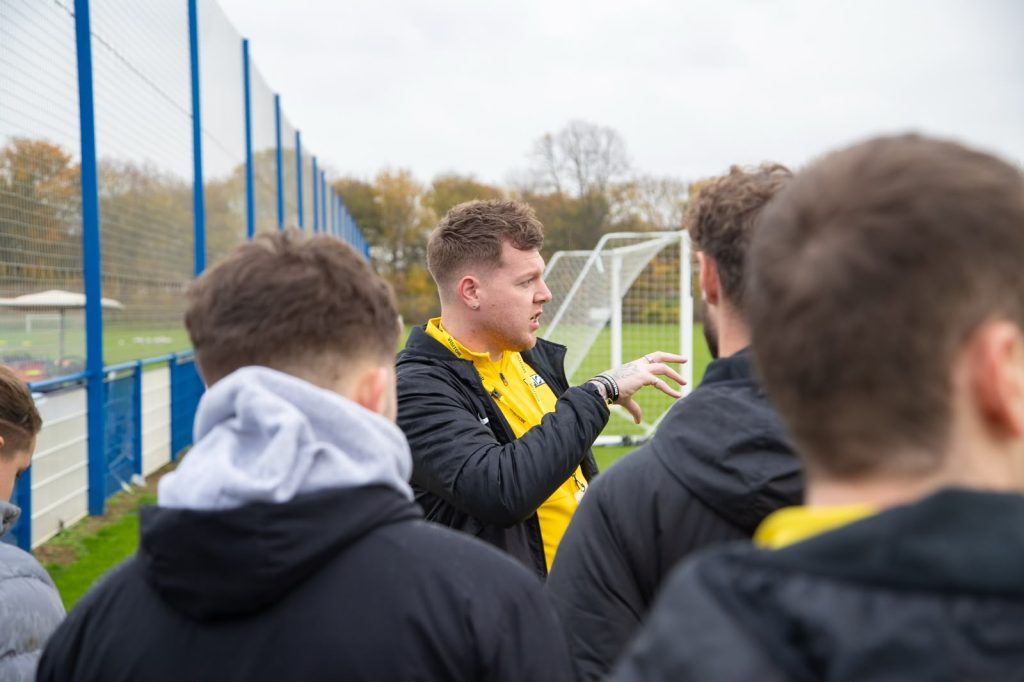
Teaching the Coaching Philosophy module, what is involved, and how is the theory actually applied as a coach?
On the module, there are reviews of how coaching philosophy is conceptualised in academic literature with regards to sport, but I try to touch on things such as behavioural analysis, morality and ethics, coaching practice, pedagogy, it’s quite broad really.
That’s because coaching philosophy is your values, your principles, and how you demonstrate those in practice. How you do so could be quite broad.
It might be through the relationships that you build, it might be through the sessions that you design, or it might be through the behaviours that you demonstrate.
For students considering joining one of your programmes, what would they have to look forward to?
Students have always really enjoyed the content itself. There’s a lot of scope for collaboration and talking around it, and I know that a lot of students particularly like the live sessions that we have in whatever format they’ve been in, including workshops, more traditional lectures, seminars, guest speakers, etc.
There’s scope to speak to your tutors, discuss some of the content, challenge some ideas, and have a little bit of feedback.
What can students expect to do when they graduate, and what skills will they have developed?
The courses are directly relevant for those that want to be a coach, an analyst or a football manager, but we’ve got students looking to start their own businesses and move into entrepreneurship too.
In terms of the skills, with regards to their own practice, whatever they might be doing, coaching or analysis, I’d expect them coming out of this being more comfortable and prepared to challenge ideas and to question what we might see to be traditional practices.
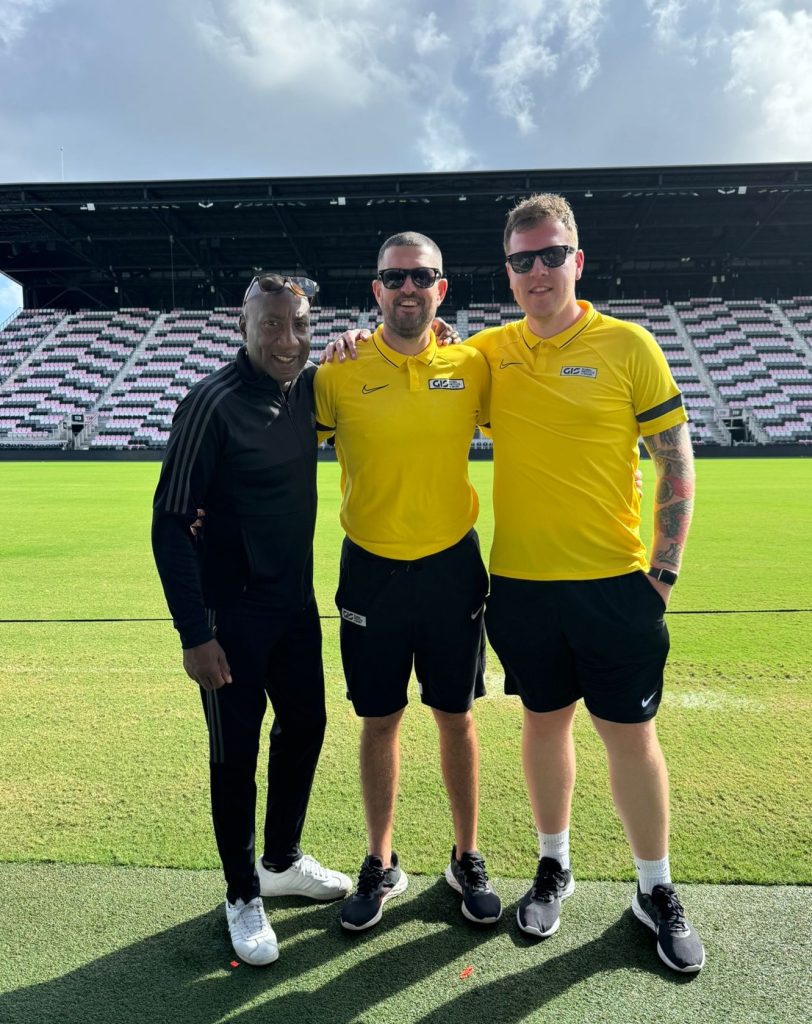
GIS has a new Coaching and Leadership programme. What made the leadership part of that worth adding?
Leadership is a huge part of coaching. It’s about developing your own practice as a coach and everything that is encapsulated within that. When you look at the portfolio that we have, you’ve got performance analysis, you’ve got coaching and analysis, but then we never had anything that was strictly in coaching.
In a nutshell, the coaching and leadership is for those that aren’t necessarily interested in that analysis side, and they’re more interested in coaching and their own practice.
Finally, what still excites you about coaching?
My last season coaching was with Morecambe (before they all got relegated, so I’m not taking credit for that), where every single morning that I had a game, I was excited to lace my trainers up, pack my boots, jump in the car, and then drive what could have been 100 miles.
I can’t play as much now as I’d like to because of a few injuries, so that excitement stemmed from still being involved with the game—to still be by the side of the pitch and being in that competitive environment is what I enjoy.
I’m only 30 (so justifiably I could still be at the World Cup right now), but when you start dropping out of these team sports you start missing that competition. I enjoy that element of getting a team ready, being a part of it, and really trying to win a game.
Article by Zakaria Anani


You may also be interested in

Alumni
February 10, 2026 |
“Make Yourself Indispensable”: GIS Graduate Explains How to Take Advantage of Internship Opportunities
Read Post

Alumni
December 12, 2024 |
How GIS degree helps Sarah in managerial role at the Premier League
Read Post

Latest news
March 19, 2025 |
Sport: An Integral Part of Australia
Read Post
Our Partners