
Meet Your Lecturers: Sam Homewood on Hosting the Manchester United Podcast, the Future of Sports Media, and Breaking 11 World Records
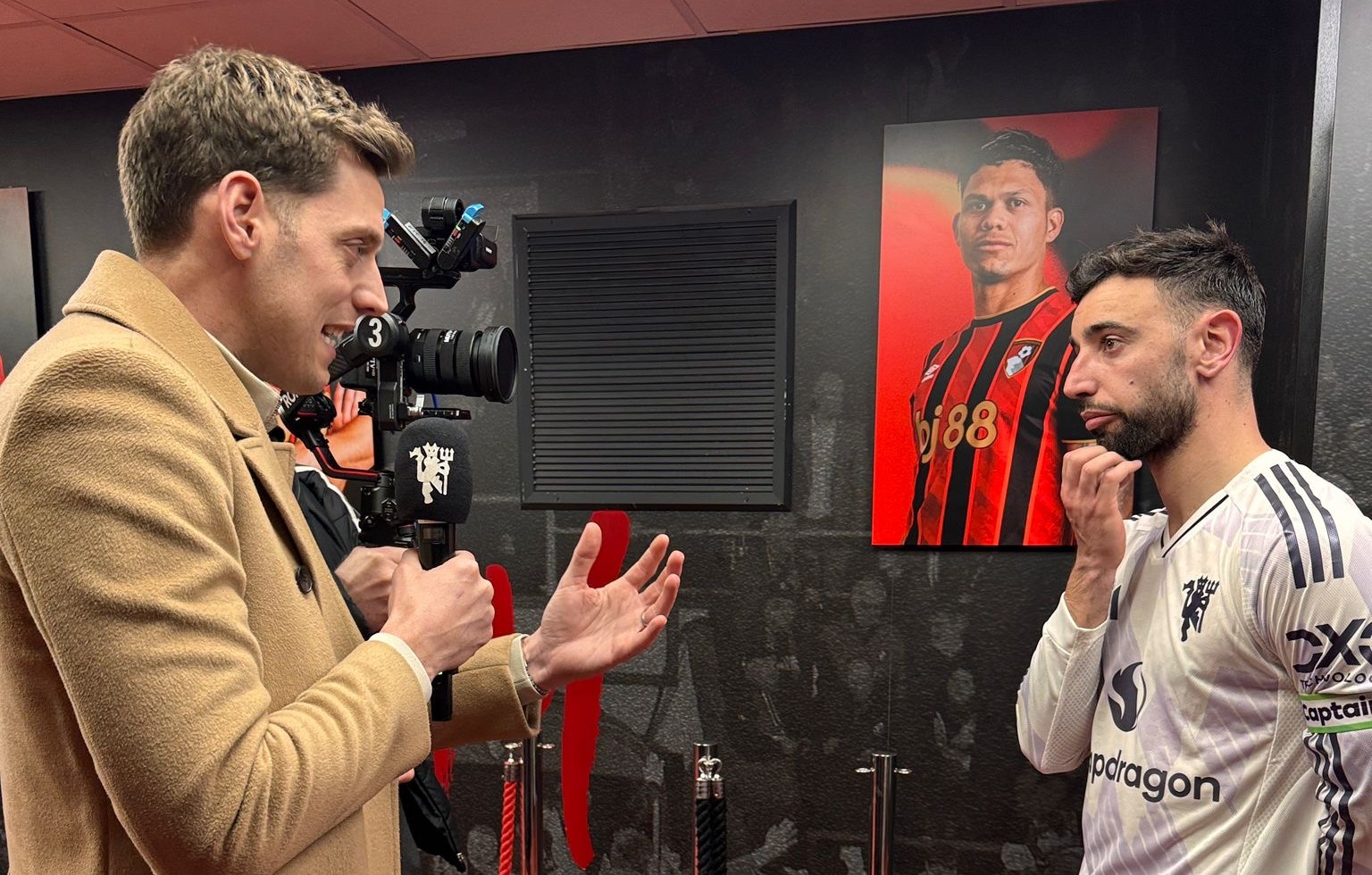
GIS lecturer Sam Homewood has fulfilled a dream many students and football fans have: Working for the club you support.
Our programme leader for MSc Sports Marketing and Media, Sam’s career in sports broadcasting has seen him work with Manchester United since 2018, where he has interviewed countless names from Wayne Rooney to Sir Alex Ferguson.
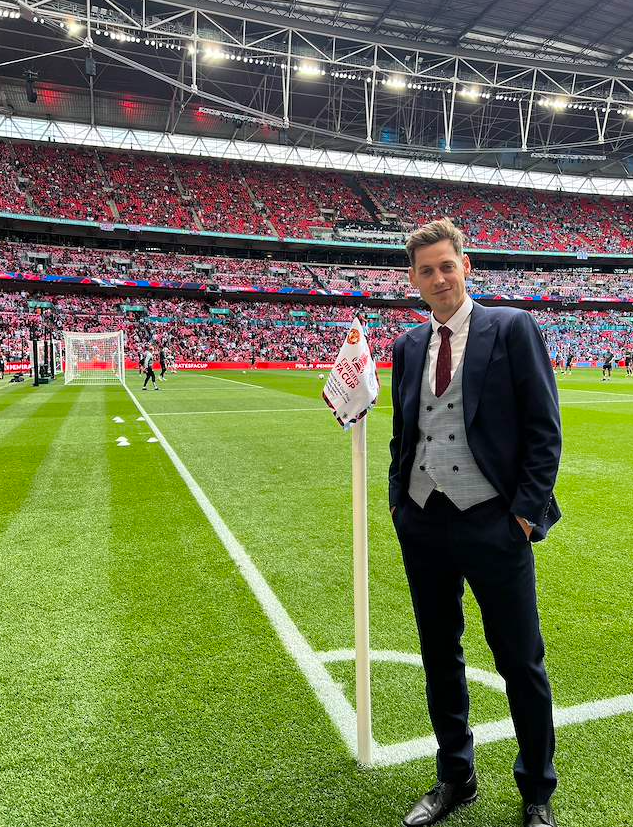
He has also presented for broadcasters such as the BBC, TalkSport and ITV, covering events from the Olympic Games to Wimbledon over the course of his media career–one that began in 2011 after completing his postgraduate studies in Journalism.
As part of our Meet Your Lecturers series, we spoke to Sam about his career in sports media so far, learning about his first role, life as a freelancer, and what he thinks students can gain from studying at GIS.
Could you run us through some of your involvement in sport and how that’s led you to teaching now?
I’ve worked a lot in industry, and what I really like doing is visiting some universities as a visiting lecturer.
It’s something I really enjoy. I really like the idea of knowledge sharing and being able to try to deliver to students what’s happening in the industry.
That’s my ambition, and it’s fun! I still do work within the sports broadcasting arena and then try to take the things that I can learn there and deliver it back into the classroom.
When you first started out in journalism and broadcasting, did the dream job look similar to what you do now? Was there a completely different goal?
I didn’t have one, to be honest!
So I studied journalism and my first job was as a gaming reporter, and I got to do quite a lot of it.
I didn’t know anything about gaming, I’ve never been a gamer, but I then managed to get a job at ITN as an entertainment reporter and broadcast journalist, and then it’s all spanned in various directions since, with very rarely, any kind of specific targets.
But I’ve got to work for a lot of the places that I would have loved to have been or have worked for. So it’s all worked out very nicely, even without a very specific plan.
Is that good advice for students, to get your foot in the door where you can, even if it’s not exactly what you want to do?
I think it depends on the person, it depends on your own view of your career and the industry and the landscape and the part of the industry you want to work in because it’s so broad and so different.
But generally speaking, I think if you can do something and you’ll learn and get some experiences from it which might change how you see things, or open up some other doors that maybe you hadn’t considered. I think those things are always a great idea.
If you don’t do it, someone else is going to, and you don’t know who you might meet along the way and what opportunities that could bring.
You’ve always worked freelance. How have you found that, and how do the opportunities for work come about?
It’s a bit of everything.
Sometimes you just have to make sure that you are making yourself available for the right things at the right time. Other times it might be a case of just making a showreel, making a CV, hearing about opportunities or just using your brain and going, ‘OK, when the World Cup comes around I know things that are happening because of it. So what can I offer in that scenario?’
I think it’s really difficult to know, because one view of broadcast is that it encompasses everything that you access from your phone, such as podcasts, radio, YouTube, Reels and TV, etc.
But long form is so important, as is journalism. It just has a different place in the world than it used to, but I don’t think it has any less value.
What the future holds for it, I don’t know. It depends how much it gets prioritised. It will always be needed, but locally, a lot of local journalism has vanished.
You’ve done a lot of work with Manchester United in the past. Could you give a brief overview of your role, as well as what you enjoy most about it?
Now I do a couple of things a season, but before I was reporting every home game and most away games, which included talking to fans, speaking to former players who were acting as pundits, speaking to players, and interviewing the manager.
Different days would be different roles, not necessarily all of those things in one go, but a bit of all of those things over the course of a season at home and away.
I’m also a huge Man Utd fan, so I’ve sat in press boxes at away games and, maybe professionally it’s not the most ideal situation, but I’ve been at Stamford Bridge celebrating at United when Casemiro scored a late equaliser, jumping around and going crazy. I loved it.
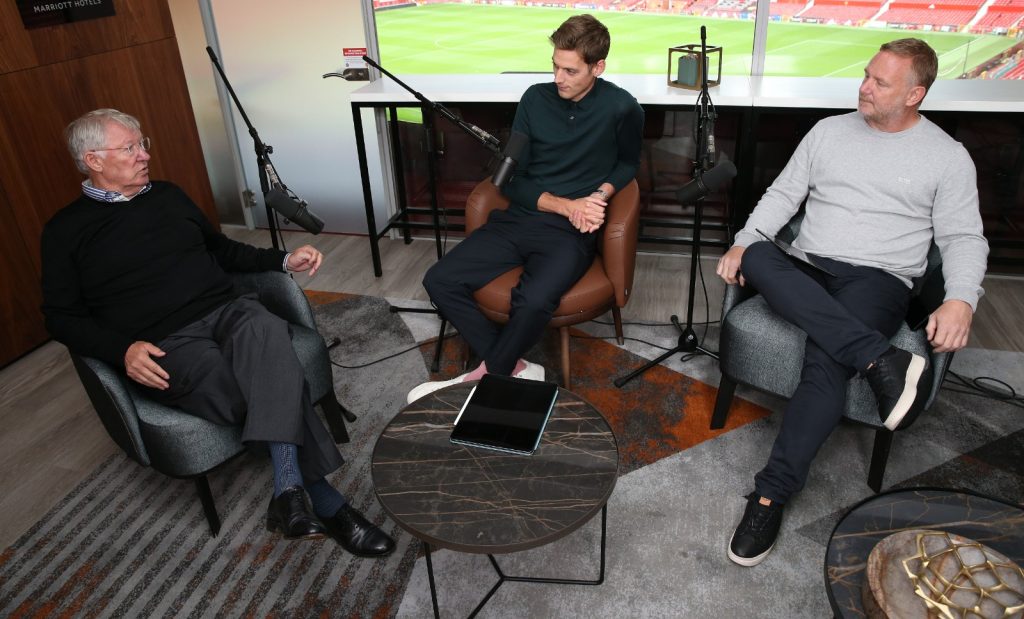
And then I did things like the club podcast, where I’d sit down with the current players and former players and have these really long chats about their careers, their lives and try to make it more character-driven and less caricature-driven, which I think football players often are.
So that was really fun, that was the highlight.
Being at the football was obviously sensational, but from a specific career perspective, the podcast was fantastic, because I got to sit down with, like, 150 former United players and staff like Sir Alex Ferguson and just have these big long chats and try and get to know the people.
It’s worth mentioning you have quite a few world records. How did those come about?
I’ve got 11 world records and I’ve been in the Guinness Book of World Records, I think, four times.
I used to present a children’s breakfast show for ITV and we would attempt to break world records on the show, and often we did!
Because I was very enthusiastic about trying to break world records–it was fun–I then did some work with Guinness World Records and broke a world record in the process of working with them.
For a prospective student, what will they gain from the MSc Sports Marketing and Media programme by the time they graduate?
A real overview of what is happening in elite sport across the board.
We cover so much and in so much detail, but, crucially for a course that can take a year or if you do it part-time, two years, it doesn’t just focus on one specific aspect.
It takes us back to the beginning of the conversation about whether you’re better off trying to do things, even if it’s not specifically what you want to do, because it puts you in the room–it’s almost like that.
You get to learn so much. If you want to work in content creation, we’ve got a module for it, but we also do content with sports media management, press conferences and sponsorship and branding, so you can learn the content creation but also understand where that fits around everything else, and I think that’s massive.
How have you found the teaching side of it, particularly the online aspect and building relationships with your students?
I really enjoy it, and I think the students get out of it what they want to, so for the students that want to, we’re always available and meet really regularly.
An example is our current course representative who is an Aston Villa fan, and we’ve spent the season talking about Aston Villa and how they’re getting on and just keep that relationship going just like you would in any other situation, so it’s great.
Finally, what would you say stands out to you about GIS? What makes it different?
I think the people. Everybody’s really dedicated and the people who are teaching really know what they’re doing.
Obviously, it’s an international institution, so not only do the students have the opportunity to meet peers from around the globe and then learn from them and learn from the experiences that they’re having, they also get to meet each other because we have the GIS Summits which take place around the globe.
There’s just so many networking opportunities for people that are within the Global Institute of Sport.
Article by Zakaria Anani


You may also be interested in

Organisation News
May 27, 2025 |
Charlie Methven joins Board at Global Institute of Sport, bolstering elite leadership team at world’s premier sports institution
Read Post
Alumni
February 4, 2026 |
GIS Graduate Nathan Edlington on his Role at Hockey Canada: “What You Put In Is What You Get Out”
Read Post

Latest news
December 10, 2024 |
Global Institute of Sport and St. Thomas University create America’s first Global Fútbol Management master’s degree
Read Post
Our Partners