

“Build the Career You’d be Proud to Explain to Your Kids”: Chris Jones on a Career Change to the Sports Industry

For many, a career change is an understandably daunting task.
Chris Jones, who joined GIS as part of our January 2026 intake, knows this feeling all too well, and spoke with GIS about his experience so far of going back to university in his 40s, how his travels around Australia sparked his interest in studying sport, and some powerful advice to professionals in other industries thinking about doing the same.
Based at our Sydney campus, Chris joined our Masters of International Sport Business programme after attending the GIS Australia Summit. Previously, he worked as Senior Community Operations Manager at Uber and Customer Service Manager at ING Group.
But in late 2024, Chris took a career break to tour Australia with his family, which got him thinking.
“The career break gave me space to reflect. I’d lived in Australia for 15 years and only scratched the surface of what this country is about,” he told GIS.
“Spending time in rural communities, I’ve seen first-hand how sport can make even the most remote and quiet towns come alive for a day when there is an event on.
“Whether it’s a local footy final, or a rodeo, the community spirit, togetherness, and family bonding resonated deeply with me in realising just how important sport can be beyond just being a job.”
Studying a masters, Chris continued, seemed the perfect pivot towards a new career in the industry.
This, however, wasn’t an easy step. Chris recalled his feelings towards starting a new degree, having not studied for many years.
“Restarting uni in my 40s was a little more daunting than I imagined it would be, but the Global Sports Summit made it feel like the right decision immediately.
“Being surrounded by people from different countries, sports and backgrounds reminded me how global and commercially complex sport really is.”
“It felt less like going back to uni, and more like stepping into the industry properly prepared.”
During our signature summits, such as the one Chris attended, students gain access to world class venues and elite live sport, as well as discussing a range of sports topics while networking with industry leaders.
An understanding of these topics were part of what helped Chris settle into his studies, a lot of which came from his past roles.
“What has surprised me most is how much my previous experience adds to the classroom,” he said.
“Subjects like governance, strategy, insights and finance don’t feel abstract to me, they’re real-world. The difference now is I’m applying them to an industry I have genuine passion for.
“You quickly realise there’s no single linear pathway into sport. That’s exciting. I can’t speak highly enough of the people within the cohort, I’m never made to feel like the old guy in the room!”
Chris then spoke in more detail about the Masters of International Sport Business programme and why it stood out to him.
“The programme looks at sport as a community ecosystem, not just matches and athletes, but private investment, breakaway leagues, governance tensions and global expansion.
“We’re seeing disruption everywhere, breakaway leagues, new media models, creator-led events, the traditional structures are all being challenged. Understanding that intersection between innovation and establishment fascinates me.”
Long-term, Chris’ interests revolve around the role of sport in communities, adding: “I’d love to spread the influence of sport and the good it does.”
Finally, he offered some advice to others who were in the same position as he was in 2024, when he was still deciding if he wanted to jump into the world of sport.
“Don’t ever underestimate the value of your transferable skills and experience.
“I’ve seen it so many times in different industries, people stop chasing titles and start choosing impact.
“Sport isn’t just ex-athletes and lifelong insiders. It needs people who understand operations, finance, governance, strategy and people.
“It was simple for me. Build the career you’d be proud to explain to your kids.”
Article by Zakaria Anani


You may also be interested in

Latest news
July 11, 2025 |
Building Experience in Sports Administration: Vilde Ringstad Student Profile
Read Post
Latest news
October 23, 2026 |
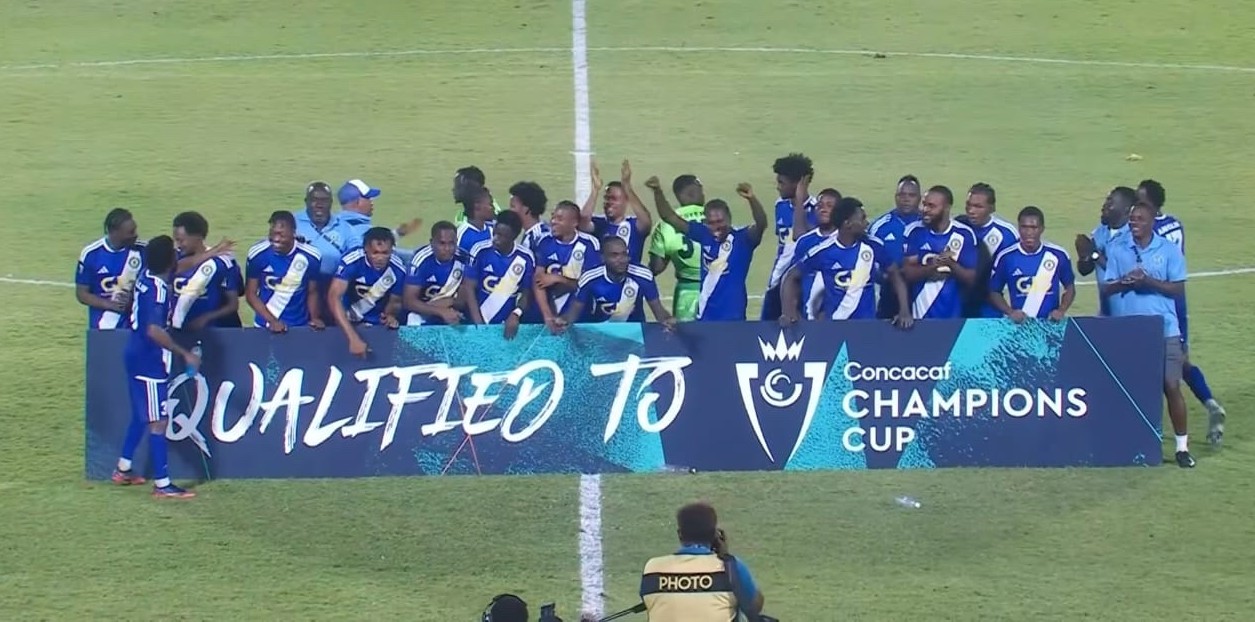
GIS Partner Mount Pleasant FA Successfully Qualifies for 2027 CONCACAF Champions Cup
Read Post

Alumni
August 5, 2025 |
What Comes After Winning the Premier League: Wes Morgan on Studying with GIS
Read Post
Our Partners