
Dr Mike Walsh Shares His Coaching Journey and Advice for Aspiring Coaches and Analysts
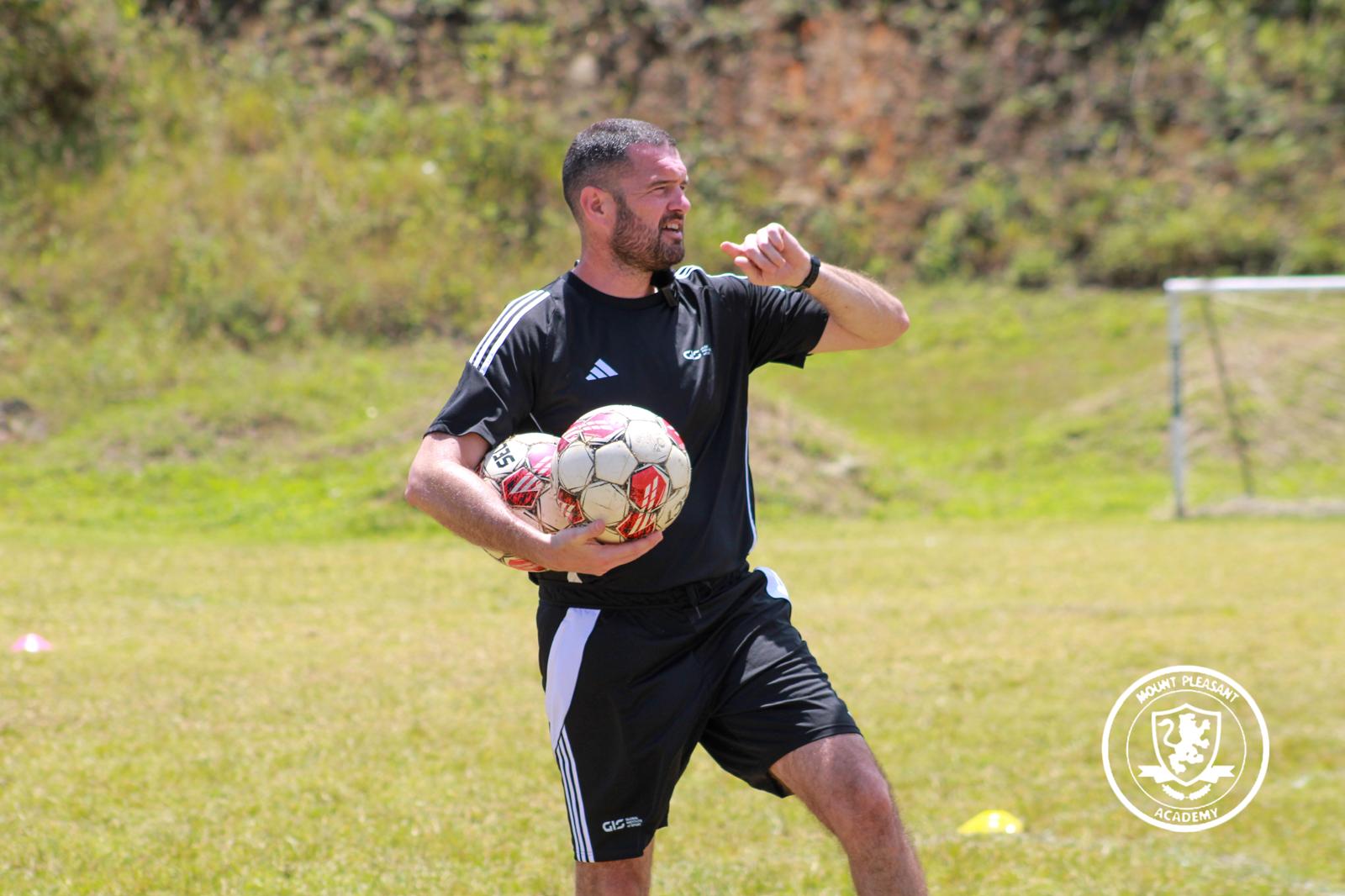
Dr Mike Walsh began his coaching career in 2004 at Manchester City Academy, working within the Pre-Academy and Foundation Phase. Since then, he has accumulated more than 22 years of experience across professional football working with players from under 6’s to under 18’s, semi-professional football, coach education, and higher education, giving him a unique perspective on player and coach development.
In 2010, Mike joined the Football Association as a Coach Educator, where he spent almost 15 years delivering coach education programmes from Level 1 through to the UEFA C and UEFA B Licences. Alongside his work in coach development, he has coached across the academies of Manchester City, Manchester United, Liverpool, Bolton Wanderers, Preston North End, Blackpool, and Wrexham, while also gaining valuable senior football experience with Leek Town, Warrington Town, and FC United of Manchester. He has also coached in College and University football.
Today, Mike serves as Provost at GIS while continuing to coach within Liverpool’s Academy, combining current industry practice with academic leadership. His ability to connect contemporary coaching practice with research enables students to develop both the practical and critical skills required to succeed in the modern football industry.
Mike holds the UEFA A Licence, Advanced Youth Award, a Master’s degree in Sports Coaching, and a Doctorate in Applied Sport and Exercise Science. His doctoral research examined how coaches acquire, develop, and apply professional knowledge in within elite football environments.
In this Q&A, Mike reflects on his coaching journey, shares lessons learned from over two decades in the game, and offers aspiring coaches an insight into the realities of working in professional football and the benefits of studying at GIS.
Back in 2000, what inspired you to first go into coaching? How did you get into coaching and teaching?
When I finished school, I wasn’t entirely sure what career I wanted to pursue. I took a job as a sports technician in a school, where I began supporting PE lessons and coaching school sports teams. It was during this time that I completed my first coaching qualifications, and that’s when I realised coaching was something I genuinely wanted to build a career around.
Two years later, I enrolled at Liverpool John Moores University to study Coaching Science, and that really cemented my passion for the profession. The degree opened my eyes to the science behind coaching and helped me understand that great coaching is about much more than simply delivering sessions.
Teaching was never part of a master plan I almost fell into it. After graduating, I completed my PGCE and began combining teaching with my coaching roles. I initially worked in both primary and secondary education before moving into further education, where I delivered football and sport programmes.
That combination of coaching and lecturing suited me perfectly. I enjoyed being able to spend part of my week on the pitch working with players and the other part in the classroom helping students understand the theory behind effective coaching and performance.
What I enjoy most is being able to bridge the gap between academia and industry. Having worked across professional football, semi-professional football, College and University football while also progressing through postgraduate study to doctoral level, I can bring real-world experiences into the classroom. Whether I’m teaching online or face-to-face, my aim is always to help students connect theory with practice and prepare them for careers as coaches, analysts, practitioners, or leaders within the sports industry.
How would you say the coaching programmes at GIS support aspiring coaches?
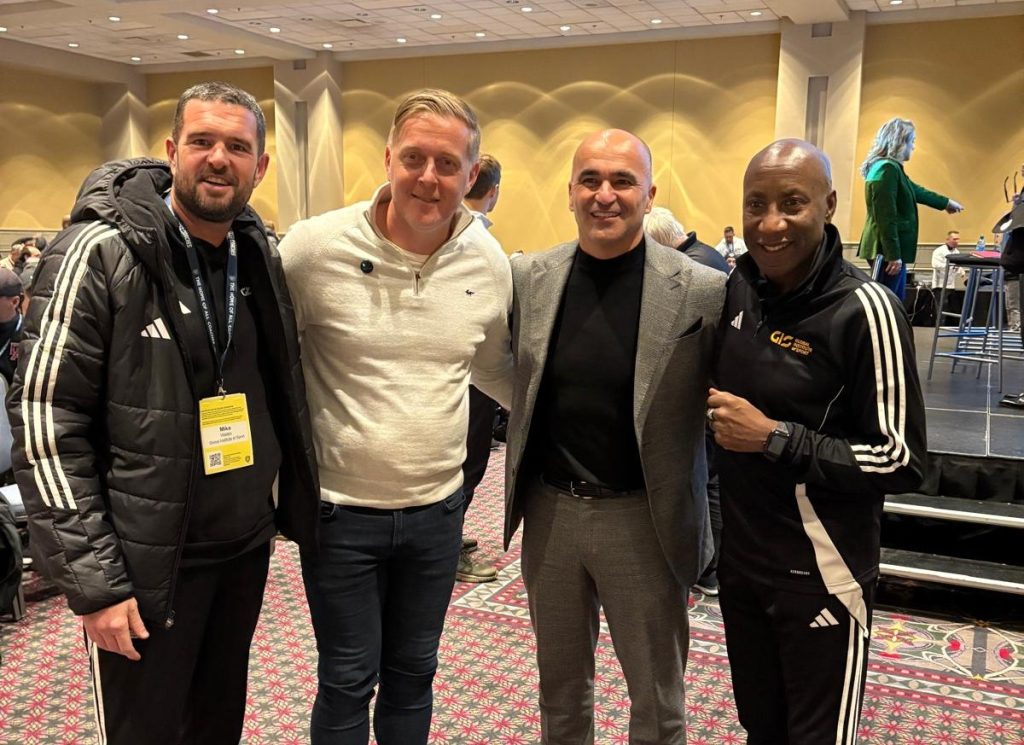
I think one of the biggest strengths of our curriculum is that it reflects the demands of the modern game. We’ve designed modules around the knowledge and skills that today’s coaches need, from coaching philosophy and tactical development to talent identification and recruitment. One example is our Match and Performance Analysis module. Data is now a fundamental part of football, but we emphasise that it should support not replace the coach’s eye. The best coaches combine data with their own observations and experience to make informed decisions.
Another module I’m particularly passionate about is Coaching Philosophy, which encourages students to think critically about who they are as coaches, why they coach, and the values that shape their practice. Across the programme, students are challenged to reflect on their own coaching, identify areas for development, and continually improve. Ultimately, the curriculum equips coaches and analysts with the practical skills, critical thinking and self-awareness needed to succeed in the modern football industry.
Some students may see postgraduate study as an alternative to practical experience. How important is doing both?
For me, if you’re going to study a coaching or analysis course, you need to be coaching or analysing alongside it. It’s important that you don’t just gain knowledge you need to apply it in a real environment. That doesn’t have to be at an elite academy; grassroots football provides just as many valuable opportunities to develop, experiment and learn.
One of the strengths of the GIS programme is that much of the learning is directly linked to practice. Many of our assignments are based on real-life scenarios, encouraging students to apply theory within their own environments. By reflecting on their experiences and testing new ideas, students develop the practical skills and confidence they’ll need to succeed in the football industry.
GIS recently developed a Football Coaching and Leadership programme. What’s the significance of the leadership part?
We’ve developed two distinct pathways because we recognise that not every student has the same career ambitions. Some aspire to become coaches or analysts, while others see their future in leadership roles within football. Both pathways provide a strong coaching foundation, but students can tailor their studies to align with their professional goals.
For those interested in becoming sporting directors, technical directors or senior leaders, the leadership pathway explores areas such as managing sports organisations, strategic decision-making, governance and leadership. It helps students understand how football clubs operate at every level, from managing relationships with the board to leading staff and driving performance across an organisation, providing a balanced blend of coaching expertise and business knowledge.
What do students enjoy most about studying with GIS?
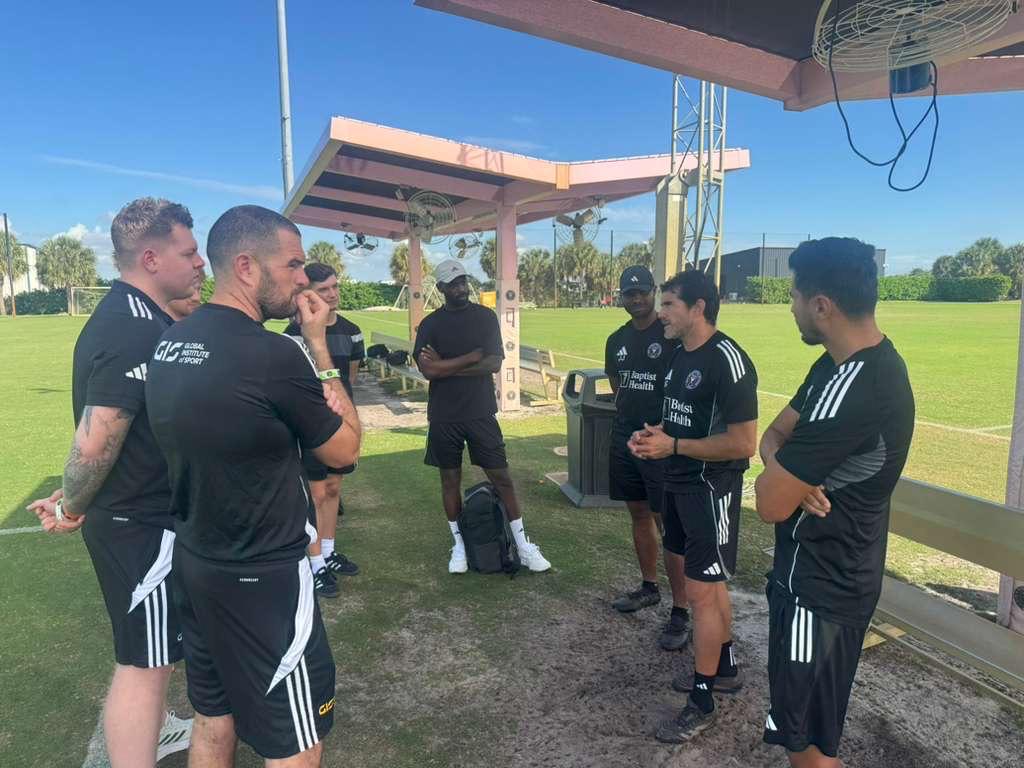
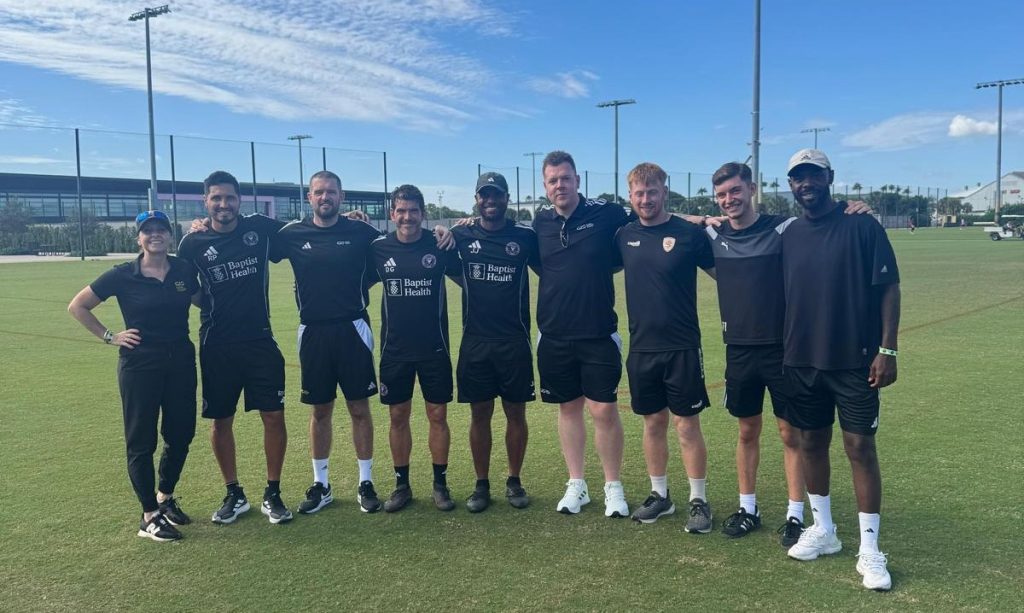
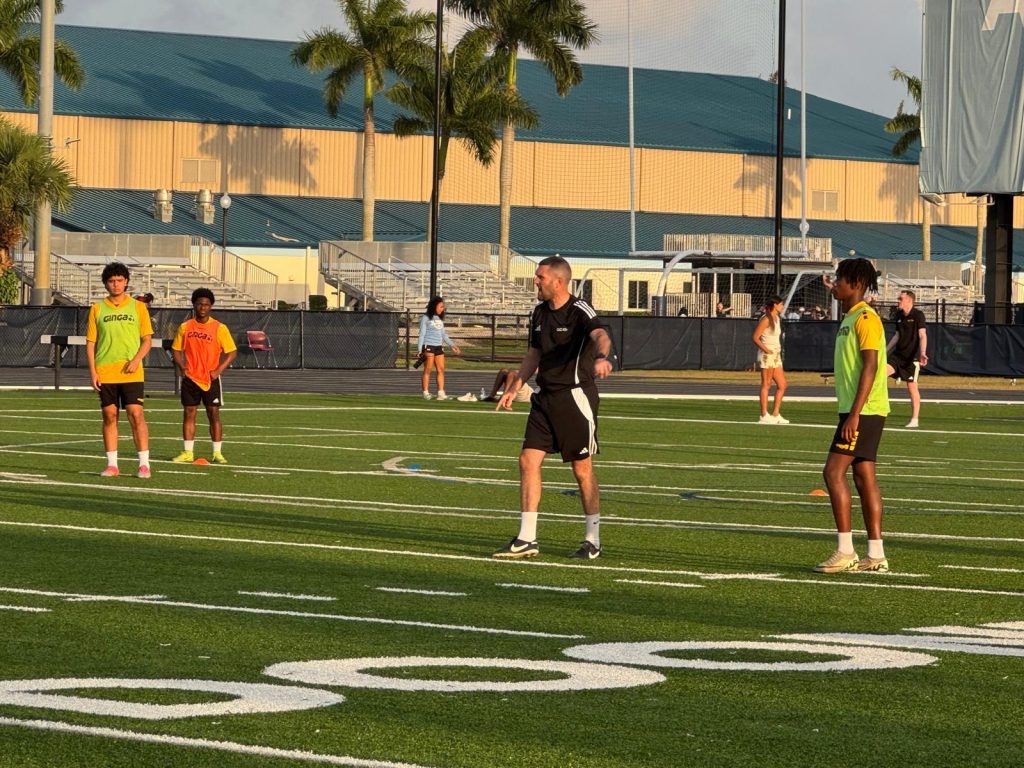
Our Live Labs and Immersive Experiences at Inter Miami, Mount Pleasant Academy in Jamaica and Watford in the UK give students the opportunity to observe academy and some cases first-team environments first-hand. Students gain behind the scenes access to training sessions, match preparation and performance meetings, allowing them to see how professional clubs operate on a day-to-day basis.
One of the highlights is the opportunity to work pitch-side, analysing coaching behaviours, technical and tactical practice, communication and leadership in real time. Alongside these visits, students have also supported coach education initiatives and provided opposition analysis for clubs such as Inter Miami Academy and Mount Pleasant Academy 1st Team and U17’s. These experiences bring classroom theory to life, enabling students to apply their learning in authentic football environments while building valuable industry experience and professional networks.
Finally, when students graduate from GIS, what opportunities do they go on to pursue?
Our students come from a wide range of football backgrounds and progress into equally diverse careers across the game. We currently have students working in performance analysis at Celtic, coaching within Brentford’s Academy, and working for clubs including Arsenal, Manchester City, Liverpool and Manchester United. Others have gained valuable analytical experience supporting UEFA and CONCACAF competitions.
Internationally, our students and alumni are making an impact across the football industry. We have students working at Inter Milan and Miami FC, while several graduates have progressed into Sporting Director and senior leadership roles across the United States. It’s something we’re incredibly proud of and reflects the strength of both our industry partnerships and the practical nature of the programme.
Article by Zakaria Anani


You may also be interested in
Academics
Latest news
August 4, 2026 |
Meet Your Lecturers: Ryan Hayes on the Skills Needed for Employability, the Importance of Small Clubs and AI in Sport
Read Post

Organisation News
December 5, 2025 |
Global Institute of Sport Wins Advancing International Education Award at Independent Higher Education Awards 2025
Read Post

Latest news
March 20, 2025 |
The Rise of Sports Analytics
Read Post
Our Partners