

Meet Your Lecturers: James Bush on Academy Coaching and the Impact of Online Learning for Coaches
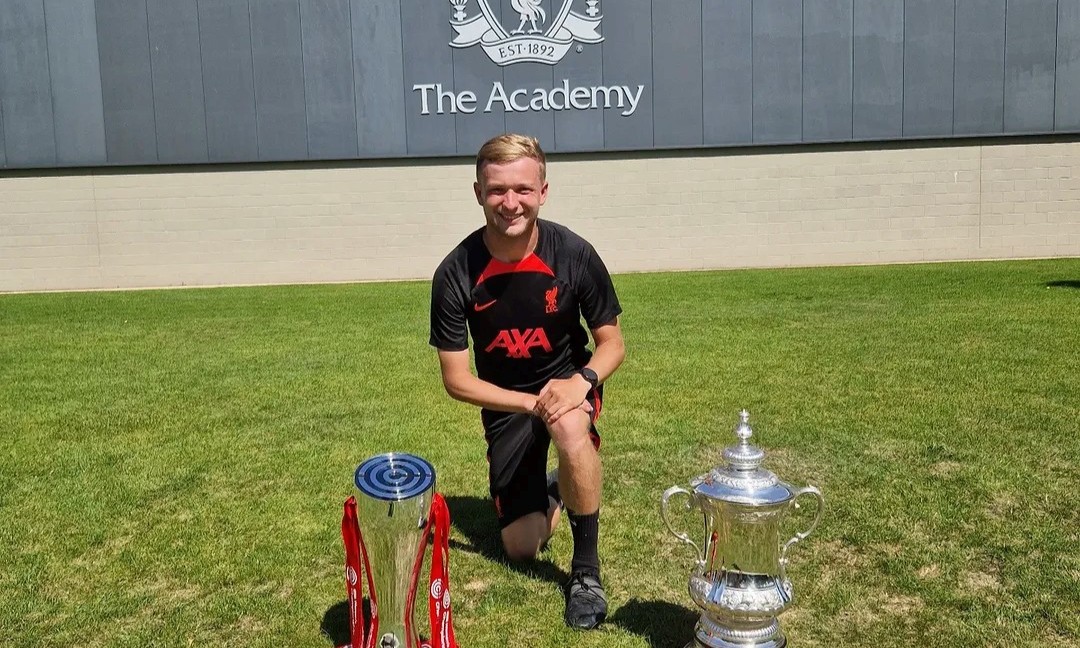
In the UK, it is estimated that there are around 3.1 million sports coaches. Within this number, 53% are in paid roles, and 12% list coaching as their primary occupation.
Alongside the sports industry as a whole, coaching is therefore a growing discipline, encouraging more and more students to take part.
In this Meet Your Lecturers Q&A, James Bush, Course Leader for our BA (Hons) Football Coaching degree, discusses his published research on coaches’ online learning, his coaching experience at Wigan Athletic and The FA, and shares advice for aspiring coaches.
You began developing as a coach while studying. How important is it for aspiring coaches to combine academic knowledge with practical experience?
For me, they complement each other.
Studying gave me the theoretical foundations to understand why we coach in certain ways, whereas practical coaching experience taught me how to actually apply those ideas in the real-world context.
Looking back, some of the concepts I learned at university didn’t fully make sense until I’d experienced them in practice, and this is where I encourage students to critically think about what they read and engage with content.
I think the best coaches are those who are willing to combine both academic and practical knowledge, using research to inform their practice while continually reflecting on their experiences.
You were later an academy scout at Wolverhampton Wanderers. Do you think the skills needed to be a good coach, scout and analyst are relatively similar, or are they different disciplines that students should specialise in early?
I think there’s definitely a lot of overlap.
All three roles require strong observation skills, critical thinking, communication and the ability to make evidence-informed decisions.
That said, each role also has its own specialist knowledge. As basic examples, a scout is constantly evaluating potential, an analyst is interpreting performance data and video, while a coach is focused on developing players and managing people.
Personally, I think having exposure to all three areas early in my career was really valuable because it gives you a broader understanding of the game.
As you gain experience, you’ll naturally discover where your strengths and interests lie and can begin to specialise.
You don’t know what you don’t know!
Working across multiple countries with Liverpool’s International Academy, were there any differences in coaching practice that surprised you?
One of the biggest things I noticed was that while football is a global game, the coaching culture isn’t.
Different countries had different expectations around communication, player autonomy, parent involvement, and even what success looked like.
I learned very quickly that you can’t just deliver the same session in every environment and expect it to have the same impact.
For example, coaching in Scandinavia, I was impressed, almost blown away, by players’ ability to learn, and this led to me having to be considerate of the challenge point I present as a coach.
Being adaptable became one of the most important coaching skills I developed.
It also reinforced the importance of understanding the people you’re working with before trying to impose your own way of doing things.
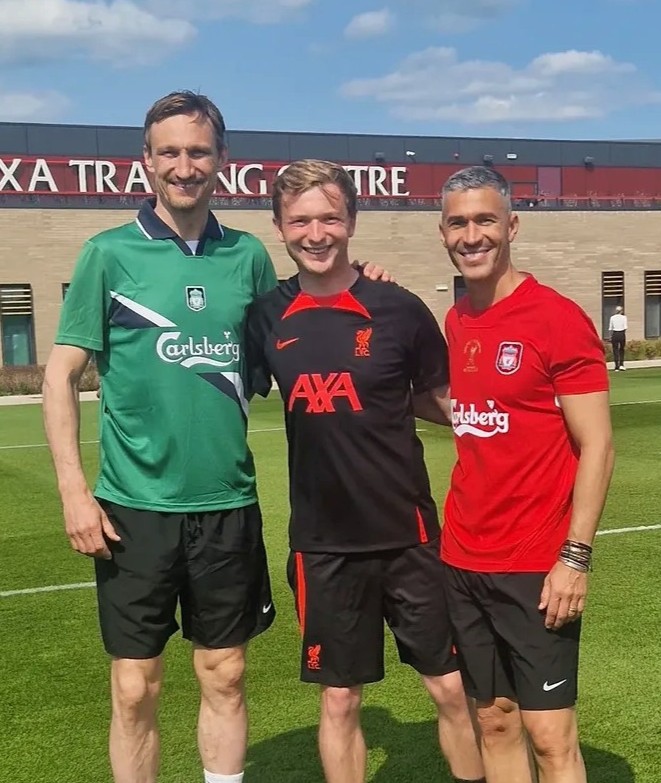
You’ve recently published research on coaches’ experiences of online learning, which is how GIS students complete their studies. How important is academic research to the field of coaching, and how do you see your research being applied in the future?
I think academic research is incredibly important because it allows us to move coaching, and in my case coach education, forward rather than relying solely on tradition or anecdotal experience.
Coaching is becoming increasingly evidence-informed, and research helps us understand not only what works, but also why it works and in what contexts.
My own research explored coaches’ experiences of online learning, and I hope it contributes to improving how coach education is designed and delivered in the virtual domain.
Online learning isn’t simply about transferring face-to-face content onto a screen, but it requires thoughtful design that encourages interaction, reflection and an accessible experience.
Hopefully, the findings can help course designers and developers create more engaging and effective development opportunities for coaches.

As an Academy Coach at Wigan Athletic and Coach Developer with The FA, what advice would you give to aspiring coaches about the industry?
I’d probably say three things.
Firstly, never stop learning. Coaching is constantly evolving, and the best coaches I’ve worked with are those who remain curious, ask questions and are open to new ideas rather than believing they’ve got all the answers.
I promise that, even though I’m an academy coach, I’ll always learn something from grassroots coaches that I help develop within my role at The FA. On every course, that happens, without fail.
Secondly, focus on building relationships. Your technical knowledge is important, but your ability to communicate, earn trust and positively influence players, parents and colleagues is often what separates good coaches from great ones.
Opportunities often come to people like this more organically.
Finally, be patient. Coaching is a profession where opportunities often come through consistency, reliability and the relationships you build over time, rather than expecting rapid progression.
In my career, I’ve had many setbacks. It took six years to even get onto my UEFA B Licence, and there were times when I thought about giving up trying to achieve the licence.
However, patience prevailed and I didn’t look back from then on.
Article by Zakaria Anani


You may also be interested in

Latest news
September 11, 2025 |
Inside Event Management at the World Cup: ‘Relationships Were Tested Hourly’
Read Post

Organisation News
July 4, 2024 |
GIS delighted with National Student Survey improvements for 2023 results
Read Post

Latest news
August 13, 2026 |
Football Association CEO Mark Bullingham among sports industry guest speakers for students at GIS Welcome Week
Read Post
Our Partners