

Meet Your Lecturers: Jarno Stegeman on What It Takes to Deliver a Major Sporting Event

Large-scale events are extremely commonplace in sport, with stadiums seating tens of thousands, and sometimes hundreds of thousands, selling out nearly every weekend.
With these numbers comes significant environmental, financial and safety considerations, and planning events accordingly is no small feat.
The sign of a successful event, according to one expert, is to make it all look seamless.
That expert is Jarno Stegeman, a Senior Lecturer at GIS with over two decades of experience in the events industry.
“If an event is well planned and executed,” he told GIS, “spectators will not notice the safety and sustainability aspects. I think that is the challenge for event organisers, to organise things in such a way that it feels natural for spectators.”
Jarno began his career in the music festival industry with a particular focus on Electronic Dance Music, or EDM, before moving into education in 2005. His interests, however, still surround the licensing, safety, and sustainability efforts that go into large-scale events, of which there are countless in the world of sport.
Leading the MSc Football Business programme, Jarno draws on his expertise when it comes to the licensing aspects of organising events, where guidance and regulation are a part of what he labels a “multi-disciplinary and multi-dimensional aspect of the planning process.”
“In my lessons I try to combine my experience with academic insights and industry practices,” he said, and encouraged students to look further than the sport at large-scale events should they aspire to work in the industry.
“Read beyond the results that happen on the pitch. Did stadia sell out? Were there any crowd related issues? How did they deal with extreme weather? You can even go and read the original bids of cities who hosted matches, did they organise what was promised? Think of the Fifa Fan Festival in Boston that got cancelled, even though that was one of the criteria in order to host.”
The environmental aspect of sports events that Jarno mentions is becoming an increasingly popular topic, with the impacts of climate change on the World Cup, and vice versa, being a particularly discussed headline in recent months.
As such, event organisers juggle immediate financial incentives with environmental responsibility, though these are not factors Jarno considers to be mutually exclusive.
“Don’t look at environmental sustainability as an add-on cost, but make it part of the strategic intent of a sports organisation.
“Sustainable practices often lead to reduced costs and an improved relationship with stakeholders. If done properly you make the organisation more efficient, hence costs can go down. It shouldn’t be commercial success OR sustainability. Instead, it should be commercial success AND sustainability.”
Over the course of his career, Jarno has worked across countless events as a consultant. But when reflecting on the one that taught him the most, he candidly recalled his first large-scale festival.
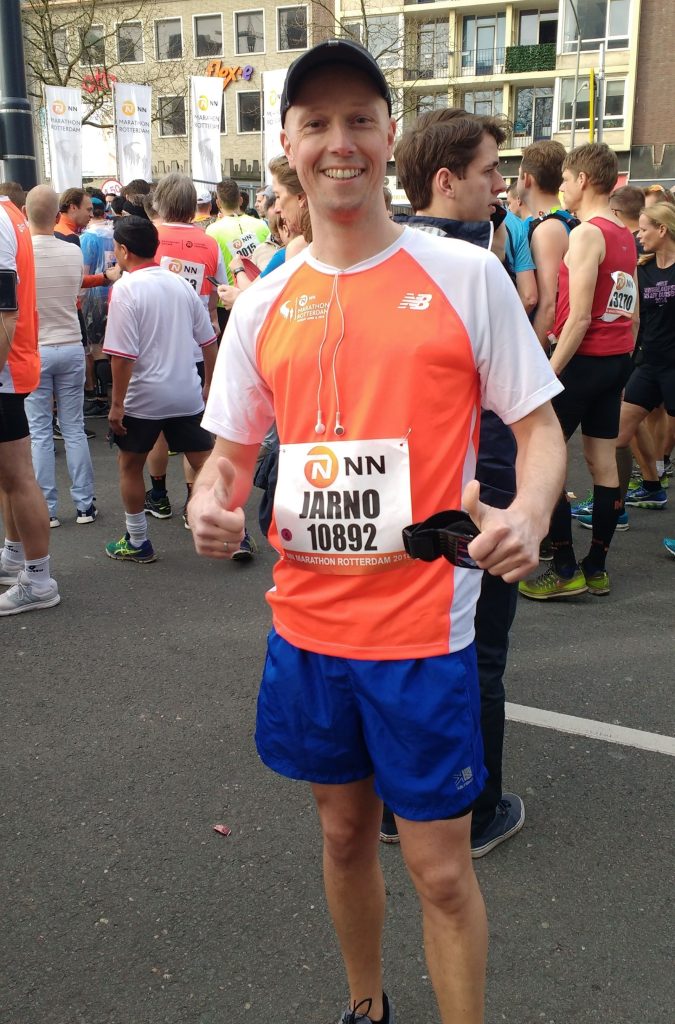
“It was a real eye-opener because, to me, no one really knew what the other one was doing, despite it being a 90,000-capacity festival. The lack of coordination and lack of collaboration was astonishing,” he added.
“I learned a lot by constantly asking ‘how can this be done differently and better?’’”
As part of a career aiming to promote a better and safer event industry, Jarno’s work now extends to teaching the next generation of sports professionals with GIS. To those considering his programme, he concluded with some advice:
“Next time you go to a football match, look around; how has everything been organised? The [online] communication, the journey to the stadium, getting inside, the atmosphere, everything… and obviously the match.
“Take it all in and realise that there is a team of people involved in planning and organising
all of this. Have an open mind and keep asking questions, network with the other students on the course and at GIS, and above all enjoy the experience!”
Article by Zakaria Anani


You may also be interested in

Latest news
September 5, 2025 |
Studying at the Home of Football: Wembley’s Most Iconic Moments
Read Post

Latest news
October 21, 2025 |
Who Owns Football? 50+1, Socios, and Franchise Model Explained
Read Post
Latest news
Student Profiles
August 18, 2026 |
Building a Coaching Career in the U.S: Charlotte Purcell on her GIS x CAS Experience
Read Post
Our Partners