

Modern NCAA Explained: Eligibility, Transfers, NIL and Conference Realignment
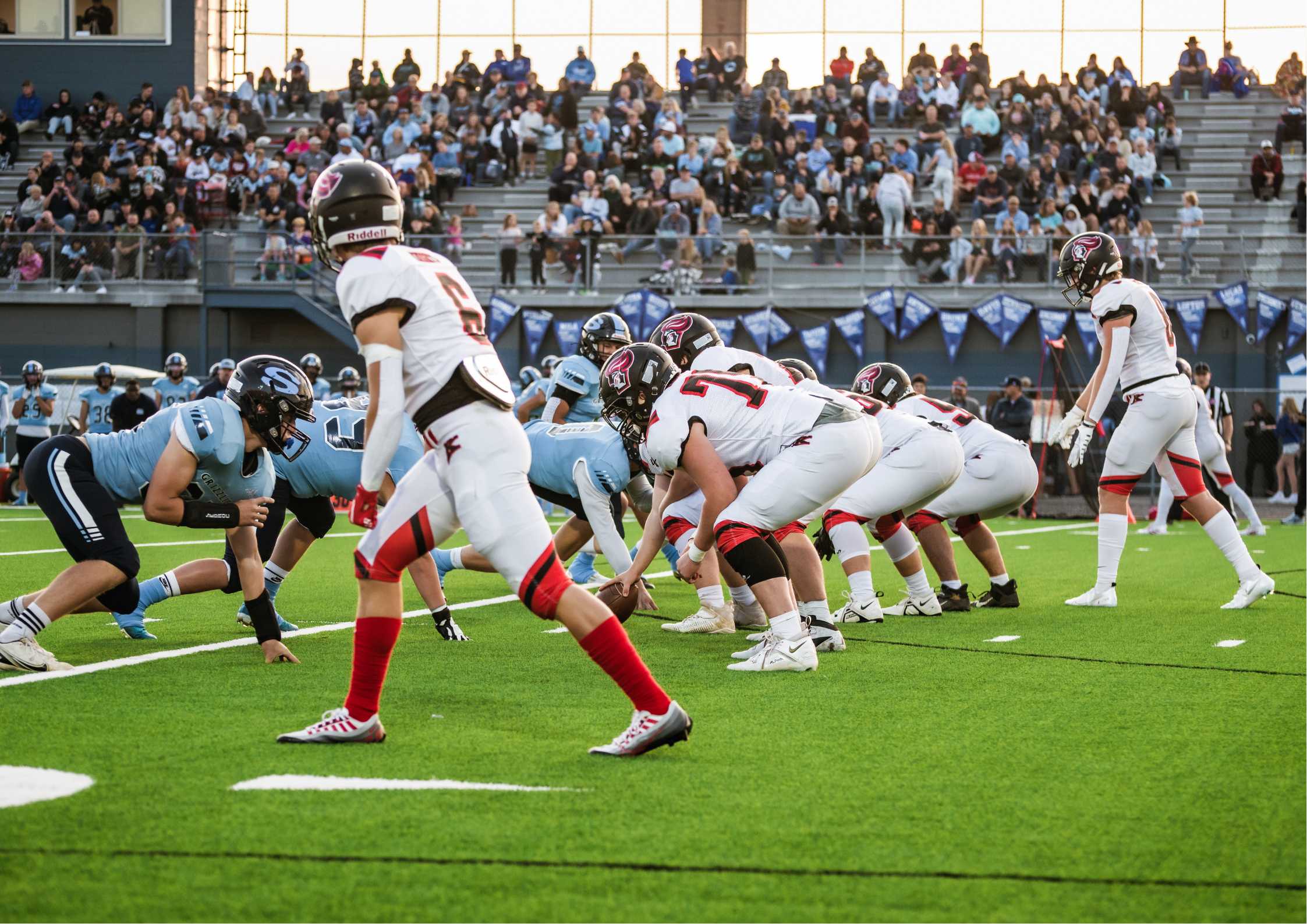
In the US, college football is the second most popular sport. 42% of respondents to a 2024 survey stated they were fans of college football, with a further 26% classing themselves as ‘diehard’.
Away from the continent, this can seem hard to believe. How can it be that college sport—the closest equivalent the US has to youth academies, can be more popular than professional leagues?
While we’ve already covered some of the reasons for this popularity, the current NCAA scene leaves plenty more to be unpacked. As part of its status, the lines between amateurism and professional sport have been blurred, leading to controversy.
This article outlines some of the key debates shaping modern NCAA sport, including the debated topics of eligibility criteria, NILs, and college realignment.
NCAA Eligibility
The National Collegiate Athletic Association, better known as NCAA, is the main organiser and governing body of over 1,100 schools and 500,000 students who compete in college sports.
Typically, the best high school athletes will receive scholarship offers to join a college programme, and this is the traditional path to play NCAA sport before hopefully turning professional.
In the US, student-athletes are generally allowed four seasons of competition. Within this, they follow the NCAA’s Five-Year Rule that states those four seasons must be completed within a five-year period that starts when the student first starts college.
The extra year is designed to allow the athlete to have a redshirt year, which is a buffer season where they do not compete for the purpose of focusing on their studies, improving physically, or to better settle into the school, for example.
Under the Five-Year Rule, there has been a recurring theme of athletes receiving waivers and special dispensation to extend the time they can play in college. A new proposed rule, labelled the Age-Based Model, aims to give a more strict five years from when athletes graduate high school or turn 19 years old (whichever comes first) to prevent these special cases, which have created grey areas that have often made it difficult for the NCAA to abide by their own policy.
This desire to stay in the college/NCAA system has been consistently highlighted in recent years, with basketball being a major example.
James Nnaji is a Nigerian centre currently playing for the Baylor Bears of the Big 12 Conference who, in 2023, was drafted by the Detroit Pistons, and NBA team, though he did not sign a professional contract.
Before this, he played professionally for four years for FC Barcelona, meaning he would normally be prevented from playing college sport, which is still considered to fall under amateur competition.
While the rules on this state that players who earn more than ‘actual and necessary expenses’ are prohibited from playing in the NCAA, with an emphasis on those who have signed an NBA contract, the rules are enforced on a case-by-case basis, and Nnaji was ultimately permitted to play in the NCAA.
Other examples of players challenging the rules are Charles Bediako and Amari Bailey, who have both taken legal action in attempts to return to the NCAA after playing time in the NBA G League, and in Bailey’s case, the NBA itself.
The Transfer Portal
While players have been attempting to move between the NCAA and NBA, the freedom of movement between college teams has not always been so easy.
Until 2021, college players who wanted to switch colleges could do so, but had to spend a year on the bench before they could represent their new team, sacrificing a year of eligibility. However, the One-Time Transfer rule in 2021 meant players could transfer once without the one-year penalty, increasing the amount of Division I and II player transfers by 72%.
This transfer of talent was made easier with the Transfer Portal—an online database also created in 2021 that allows students to make public their desire to transfer.
In 2024, the rules were further relaxed to allow unlimited transfers without the year on the bench, but why were athletes so keen on moving?
NILs
If you follow college sports, you will have heard of NILs. NILs (Name, Image and Likeness) are the rights given to college athletes to monetise themselves via endorsements. NIL payments are separate to revenue sharing agreements, which have become more popular as athletes search for their portion of the college’s income.
have seen the athletes receive a portion of the college’s income.
The lines between amateurism and professionalism have been further blurred by the ambiguity surrounding NILs. While NILs are designed to allow student-athletes to make deals with third-party sponsors, it has been reported that colleges use their athletes’ NIL track records to attract other students.
College sport is often an attractive option as a result. In 2025, highly-regarded Duke quarterback Darian Mensah opted to remain in the college system rather than entering the NFL draft, where his rookie-season earnings would have been lower compared to his college income, according to USA Today.
Why are Colleges Switching Conferences?
A final hot topic in college sport is what’s known as realignment.
In NCAA sports, each college competes in a conference, with some of the most notable being the Big 10, Big 12, SEC and ACC. These are typically based on regions, saving students from travelling across the country for their fixtures.
In recent years, however, a recurring theme in NCAA sports has been the transfer of colleges between conferences, known as realignment. An example is the expansion of the ACC, which, despite being called the Atlantic Coast Conference, has incorporated two California-based colleges in recent years: Stanford and University of California, Berkeley.
The primary reason for this growth is commercial. A conference’s income relies heavily on its members, with more popular teams garnering higher broadcast deals and access to new markets. Some of this revenue, frequently in the tens of millions per college, is then distributed to the members, and increasingly, colleges are realigning in search of better deals.
Overall, eligibility rules, NIL and conference realignment are signs of a more commercial NCAA system than its amateur origins suggest, where the scale of college sport combined with the size of the US sports industry as a whole have turned it into a $1 trillion industry.
To learn more about how the sports industry really works, explore more our expert-led programmes at Global Institute of Sport.
Article by Zakaria Anani


You may also be interested in

Our Partners