

Explained: The FIFA Rule Changes Implemented at the World Cup
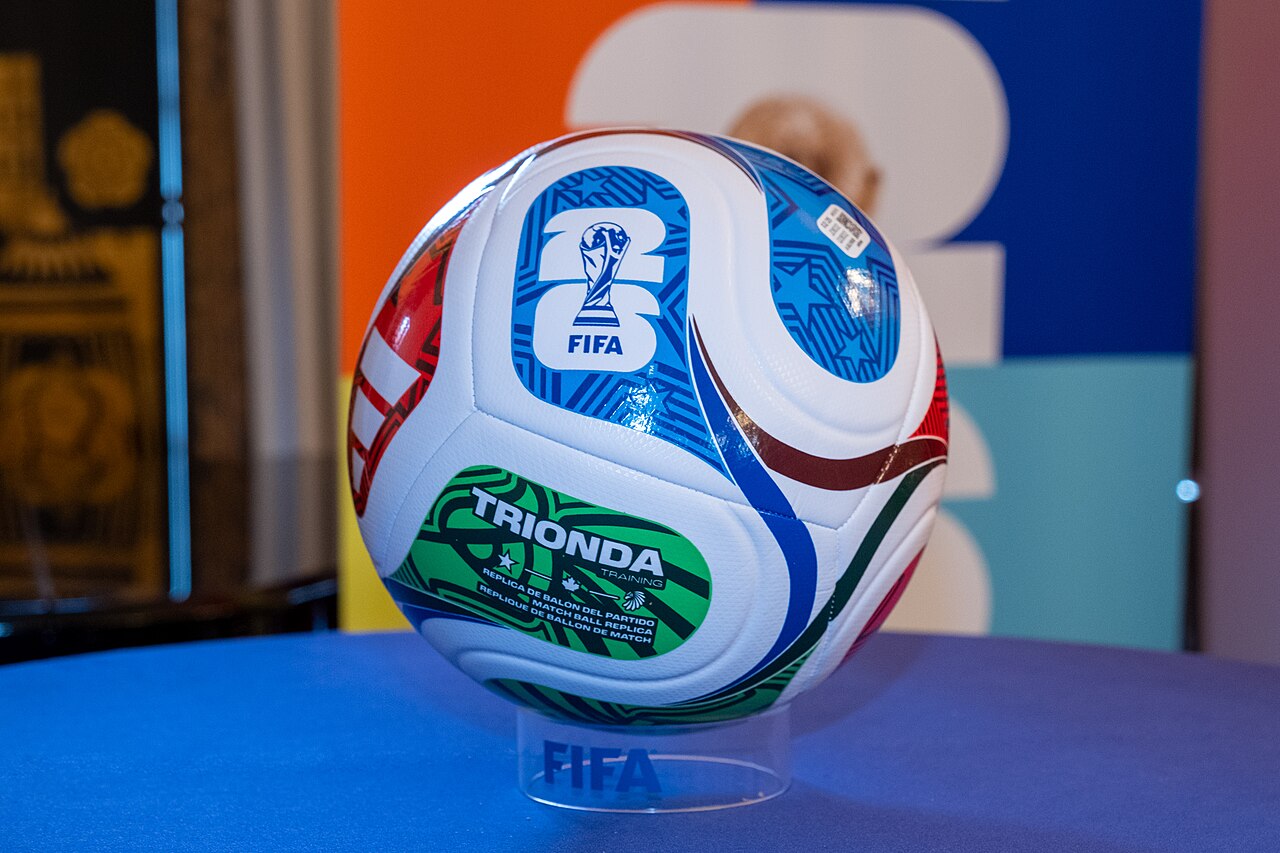
UKinUSA from Washington, D.C., USA, CC BY-SA 4.0 https://creativecommons.org/licenses/by-sa/4.0, via Wikimedia Commons
Led by Pierluigi Collina, Chairman of the FIFA referees committee, multiple rule changes have been made for the 2026 FIFA World Cup that fans may be aware of.
Referring to the official Laws of the Game from IFAB (International Football Association Board), this article will analyse some of the changes, how referees have implemented them, and how effective they seem to be.
VAR for Mistaken Identity
‘Mistaken identity reviewable when a player is shown a yellow/red card but the offence for which the card was shown was committed by another player of either team.’
One of the first examples of FIFA’s new laws being implemented was in the USA’s first fixture against Paraguay. In the 50th minute, Tim Ream was booked for a foul on Miguel Almiron, however the referee was sent to VAR and overturned his decision. This was because Ream hadn’t made contact with Almiron, who was then awarded a yellow card for simulation instead.
This was met positively by fans and commentators, who despite initial confusion over the VAR check on what looked like a normal yellow card, were happy the correct decision was reached.
Time-Wasting Prevention
Referee Countdowns
‘Use of a five-second visual countdown when a player/team is delaying the taking of a throw-in. If the time limit is exceeded, the throw-in is awarded to the opposing team.’
Designed to prevent time-wasting, the rule encourages players to restart play quickly, as referees are able to begin a five-second countdown when they believe a player is taking excessive time.
This was enforced early in the tournament when Bosnia and Herzegovina’s Saed Kolašinac failed to take a throw-in in time, resulting in possession being awarded to Canada.
Measures aimed at reducing time-wasting have been a key priority for Pierluigi Collina, though a potential issue is the point at which referees begin the five-second countdown. This can vary between matches, possibly creating a slight inconsistency between games.
Red Cards for Covering Mouth
‘At the discretion of the competition organiser, any player covering their mouth in a confrontational situation with an opponent may be sanctioned with a red card.’
Intended to punish discriminatory behaviour, players can now be sent off for covering their mouth when confronting an opponent.
Again, Miguel Almiron was subject to this rule being implemented and was given a red card in the 45th minute of Paraguay’s win over Turkiye.
This rule, however, is not a blanket ban on players covering their mouths to speak—something that has become common practice in football as players attempt to keep their tactical or personal conversations private from the increasing number of cameras and microphones present at matches.
A talking point following England’s match against Ghana, Jude Bellingham covered his mouth while speaking to Jordan Ayew but faced no disciplinary action. This is because referees are required to judge the context involved, and in Bellingham’s case, it was clear that the conversation was not confrontational or aggressive, meaning no sanction was deemed necessary.
Hydration breaks
‘For every game, no matter where the games are played, no matter if there’s a roof, (or) temperature-wise, there will be a three-minute hydration break.’
One of the most debated rules at this World Cup has been the introduction of hydration breaks.
These three-minute stoppages are intended to allow players to re-hydrate and cool down, with fixtures at 14 of the 16 venues likely to take place in temperatures many governing bodies deem a risk to player safety.
Criticism has largely focused on their impact on the matches’ rhythm, with many suggesting the breaks can be a disadvantage for whichever team happens to have momentum at the time of the break.
Netherlands captain Virgil van Dijk has expressed concerns about the viewing experience, while Croatia manager Zlatko Dalić has said: “It breaks the momentum of the game. When you are in a crisis and you need a break to take a breath, the hydration break is good.”
While FIFA President Gianni Infantino has released a statement labelling the breaks as, “purely a sporting matter,” fans have expressed further discontent at the hydration breaks being used by broadcasters to display advertisements. Others, including BBC and ITV, have opted for brief tactical analysis segments instead. Emma Hayes, in particular, has received praise for her ITV analysis during a break in Spain’s draw with Cape Verde.
What Else is Set to Change?
While the above have already been implemented, FIFA are intent on adding one more to the mix, and this regards penalty shootouts.
As it stands, two coin tosses take place: one to decide which team takes the first penalty, and a second to decide which end the penalties will be taken in.
FIFA’s proposed change, which is awaiting approval from IFAB before the knockout phase begins, would result in just one coin toss. The winning captain would therefore choose either the order or end of the pitch, with the remaining decision given to the opposing team’s captain.
Ultimately, this would eliminate the 25% possibility of one team losing both tosses and being at a significant disadvantage.
To learn more about the governance, regulations and decision-making that shape modern football, explore GIS’s range of sports management programmes.
Article by Zakaria Anani


You may also be interested in


Our Partners