

Meet Your Lecturers: Dr Heidi Coral Thornton on Business, Sport and Studying in Miami
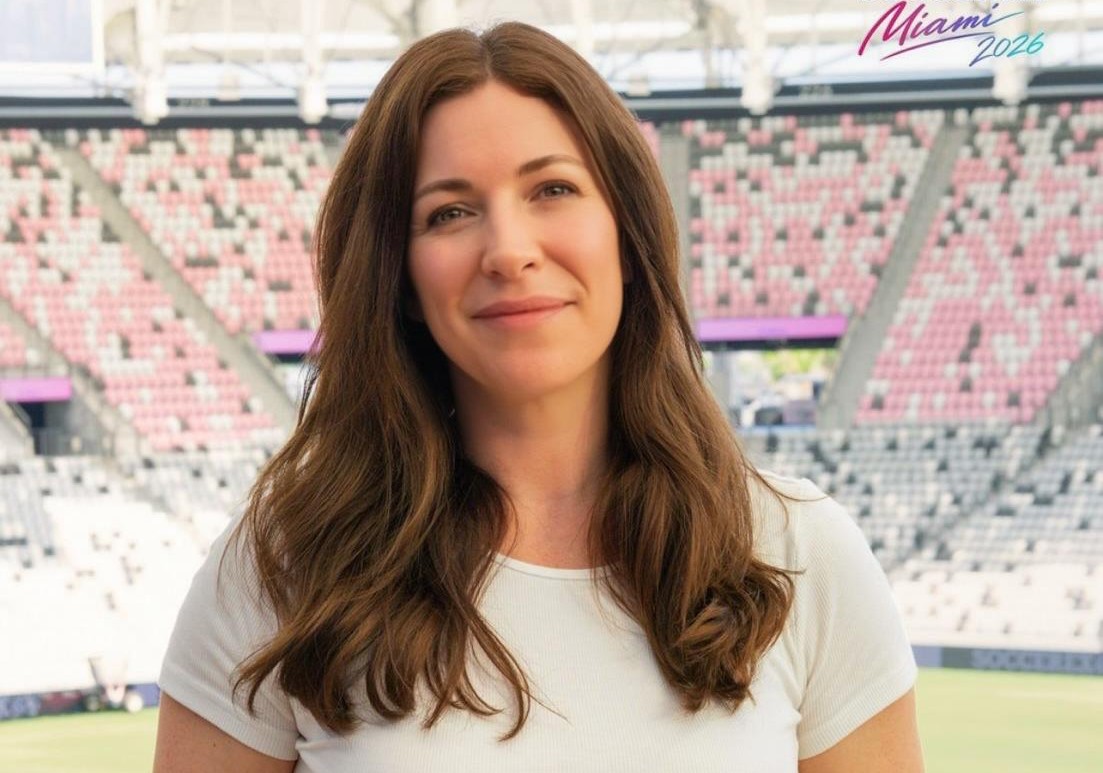
In the latest edition of GIS Meet Your Lecturers, we speak to Dr Heidi Coral Thornton, our programme director for Miami.
Through Q&As with our lecturers and academics, the series provides students with insight into the backgrounds and personalities of their current, or future lecturers.
Heidi is an accomplished academic with research experience in international business, and has taught both undergraduate and postgraduate programmes for over 15 years.
Based in Miami, Heidi discusses her research interests and their links to modern sport, how she views the differences between football ecosystems in the US and Europe, and the experience students can expect when studying with GIS in Miami.
To begin with, Heidi, could you tell us about your background, your involvement in sport and how that’s led you to teaching?
Sure! I grew up around sport.
My dad has played squash for as long as I can remember. When I was a child I danced, I played squash, I played hockey, and I spent my summers doing summer school at my dad’s sports club. And then as an adult, I transitioned more into calisthenics and running, hiking, and a bit of mountain climbing, all that good stuff.
In terms of career background, I’ve been in academia for 15 years. I’ve taught in England, in Sweden, and now in the US, where I’ve been for five years. I’ve taught undergrad and postgrad, and have been a programme director for both undergrad and postgrad courses too.
And I have my PhD! My research focus interests include international business, business strategy, entrepreneurship, and marketing, and my PhD focused on how organisations internationalise and scale globally.
When it comes to sport, I’m really interested in looking into how organisations like the NFL are trying to expand from the US into Europe. And also, of course, the massive expansion of football, and how the sports is growing here in the US.
How would you say your sporting interests and research background link to your teaching with GIS?
So my teaching with GIS is on the business side, and I realised after 15 years of teaching business more generally that a lot of the same foundations, concepts, frameworks, and models all apply within a sporting context.
It was really when I moved to the US and had so many student athletes that I started taking these general business concepts and applying them to sport, while getting more involved in the sport ecosystem here in Miami.
That was really what piqued my interest in GIS. When I first learned about GIS coming to the US, I was so excited by what they were doing and thought it was such a great pathway for students who were interested in sport.
What about Miami in particular, how does it rank as a sporting city? What makes it such a great city for sport?
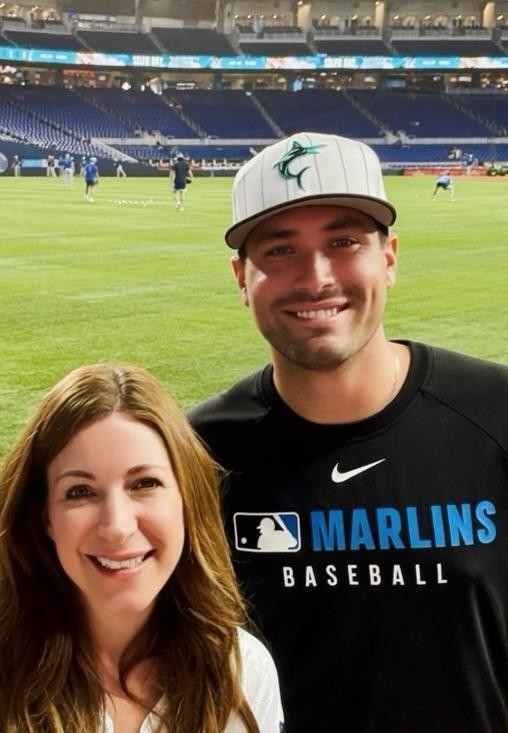
I love it. Absolutely love it. From a sports perspective, with the ecosystem we have here, I will be at as many games as I can afford or my schedule will allow.
There are the Marlins, the Heat and the Panthers. I spent 10 years living in Sweden. I never went to one hockey game, and I really regret it because it’s fast becoming one of my favourite sports!
Of course, we have Inter Miami, as well as the Dolphins.
But I think for a student, for anyone interested in sport, Miami is such a great place to be.
What about the sporting culture there? What differences have you noticed between the US and Europe?
It’s so interesting, and it’s really piqued my interest as a research avenue.
In the US, a lot is about entertainment, and I think with a lot of American ownership now of Premier League teams, it’s bringing those Americanisms to the UK, and I’m really interested in that cultural angle: is it going to work?
I’m also so interested to see how football (soccer) is going to grow here, but I would say Inter Miami is a bit of an outlier when it comes to MLS. Here in Miami, you’ve got so many people who are from Argentina, who are from Brazil, who are from those big footballing countries, so you already have a good fan base to build on.
But I’m very curious about other parts of the US that are more traditional, and how they try to get the fans on board. I think they definitely pitch it as: ‘Come for the entertainment, and hopefully you’ll become interested in the game.’
You mention that diversity in Miami. Is that reflected in your classes at GIS too?
Absolutely, I was blown away by how great the students were and how diverse the classes were.
We’ve got students from the US, Europe, South America. There’s such diversity and such amazing passion and knowledge about the sport, which is great because I’ll be able to take their passion and knowledge and help them combine it with the theoretical side. It’s just been fantastic.
What about women’s football, what have you made of its growth in the US?
I think it has the potential to really take off, and with the money and marketing know-how they have, if anyone knows their potential fan base the best, it’s the Americans.
I think the disadvantage for women’s football in the UK is that we have such an amazing, long tradition and history connected to men’s football. So we will always unfortunately be compared to that. Aside from the London City Lionesses, the clubs are typically associated with men’s teams, and I think it makes it harder to find our place.
The US, in comparison. doesn’t really have that, so I think they’re almost starting on a more level playing field.
What can a prospective student expect to get out of their studies with GIS?
As well as gaining g a great overview of football, from finance to marketing, fan engagement, and leadership, they’ll also get a great understanding of the business framework.
There are also opportunities to connect with industry through volunteering, internships, the summits they attend and guest speakers. All of those experiences can help students make their first industry connections and build their own network.
Students have had the opportunity to volunteer at Soccerex, and we’ve had two or three guest speakers so far. It’s such a great experience. And then as part of the course, they will get to do an internship, but even beyond that, there are so many opportunities here in Miami and GIS has an amazing network.
That’s really something that I love about GIS. They have just built such a fantastic network, seemingly everywhere. So, I think you’ll leave not only with a great degree behind you, but a very specific one.
If you’re a club, what better than to hire a student who has a degree specifically in football?
Lastly, what is it that makes you passionate about teaching?
Even after 15 years, it’s such a joy to teach students who have this shared passion, but there are two things really.
I love the moment when I see that students get it, where I can see they’re understanding the theories, the frameworks, and I’ve been able to communicate that to them and help them grasp it, and connect the dots.
So there’s seeing them get it and seeing them be enthusiastic and passionate, but also just sharing, learning from each other, sharing the stories, the experiences. I think those are the two main things.
Article by Zakaria Anani


You may also be interested in

Latest news
January 9, 2025 |
The Future of Cricket
Read Post

Latest news
March 19, 2025 |
Global Institute of Sport’s Australian University Partner: The University of Newcastle
Read Post
Academics
Latest news
August 28, 2026 |
Meet Your Lecturers: Sam Homewood on Hosting the Manchester United Podcast, the Future of Sports Media, and Breaking 11 World Records
Read Post
Our Partners