

Meet Your Lecturers: Why Craig Hopkins Believes Great Sports Professionals Need Great Business Skills

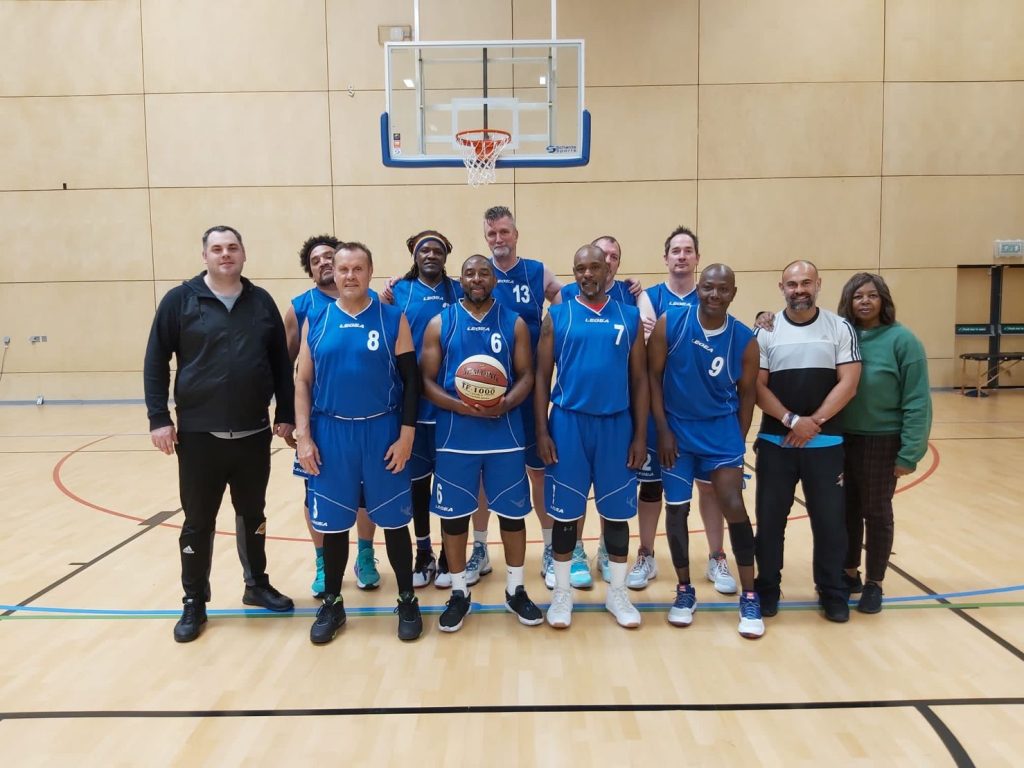
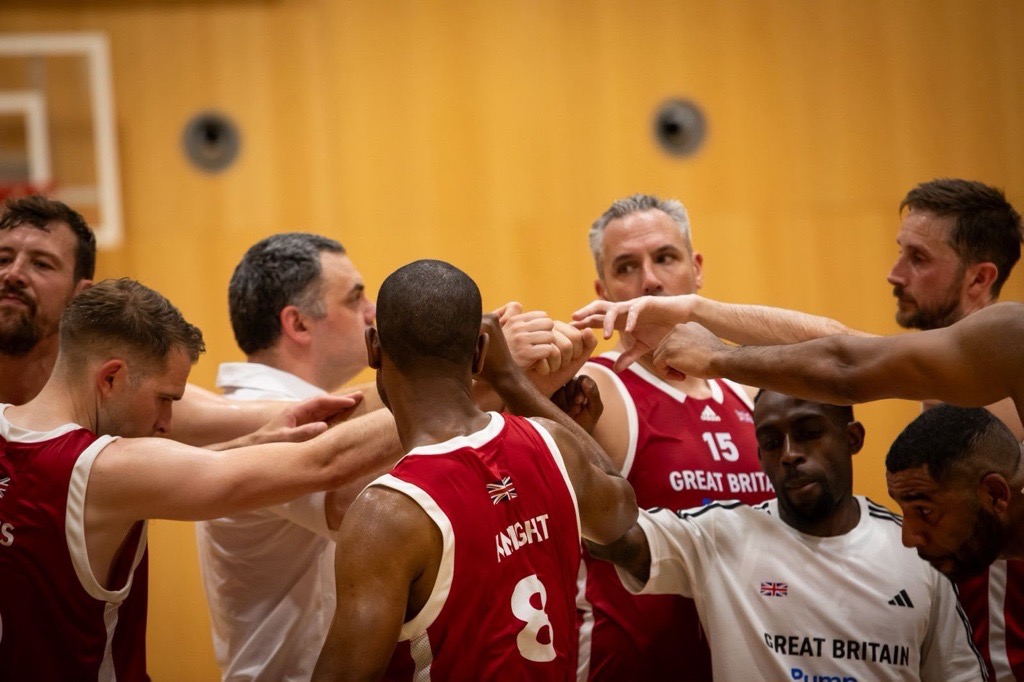
As Senior Lecturer in Sports Business at GIS, Craig Hopkins combines experience as a professional basketball player, coach, sports development professional and educator.
Having worked with organisations including Basketball England and The PGA, Craig has developed a unique understanding of both the sporting and commercial sides of the industry.
In this Q&A edition of our Meet Your Lecturers series, we speak to Craig about his career as a professional athlete, what students enjoy most about his teaching at GIS, and why understanding the business of sport is so important.
To begin, tell us a bit about your journey in sports so far.
When I finished my degree, I got a job as an assistant duty manager working at a leisure centre, worked my way up, and then got to a point where I was the actual centre manager.
I was playing professional basketball at the time, and one of the days I went in to work, I just thought, ‘oh, there’s no-one in the sports hall, I’ll just have a couple of shots and warm up for the game later.’
Before I knew it I was there for almost the whole day. Everything just ran itself.
My whole family history is basketball. My uncle played professional basketball and my dad played professional basketball. I was the next in line, if you will.
Then I moved to Liverpool and was lucky enough that I knew the head coach there at the Mersey Tigers who was one of the old Birmingham coaches. When he saw me play there, he said: ‘Come join the squad, we need some more bodies of practice, can you just come and do some work for us?’ I ended up with a couple of seasons there.
After the first year of university, I’m not going to lie, I got a bit kind of bored. So, I decided to do a Masters at the same time!
So, I did part-time over two years in Sports Development Management. At the same time I was doing my second degree in Sports Development and Marketing. Time management was key there.
That journey eventually led me into education, where I realised: ‘Teaching’s pretty cool. I like this, I can share my knowledge!’
What’s your favourite part about lecturing?
For me, it’s getting the knowledge over. The models are out there, you can look them up on Wikipedia, you can look them up online. Anyone could, in theory, just read a theory and be able to do it.
One of my skills is taking a model, taking a theory, putting it in a language, giving examples, and really helping someone who isn’t just reading it. Seeing what I call the ‘eureka moments’, where you see someone looking at a model, and then it hits them, is what I enjoy most.
For some students, I say: ‘If I was to ask you to do something with that model, could you do it? No? Well, here’s how you do it.’ It’s that process of breaking down something that could be complex into the simplest forms, so students are able to do it themselves.
What can prospective students look forward to most on the course, and what makes GIS stand out?
I think for a lot of them it’s the range of sports we talk about.
We’re from the UK, so the biggest sport is football. The biggest sport in the world is football, yes, and we even have a football business degree.
But for international sports, it’s more about looking at that global perspective.
In what we cover we talk about Asia, we talk about South America, obviously Europe, but also then the different sports that we cover.
For example, I talk about sumo wrestling and some of the cultures and richness of what they have in Japan when they come over to the UK. They’ve brought all their branding with them.
If you see something like the NFL, for example, come across to the UK, they really hype the London aspect. The Sumo Association didn’t, and they brought their traditions, so branding-wise, it’s two very different approaches.
It’s those contrasts that people then notice and go, you know, ‘Oh, it’s not just another football example.’
I think it also then, when they’re going into the world of work, makes them think differently, which is something that a lot of employers need, rather than just the same people thinking the same methods.
Another of the key things obviously that GIS does is networking. It gives you a lot of networking opportunities which students should take advantage of because you never know who you might then talk to who might be able to lead you on to someone else.
GIS recently launched the Business and Leadership degree. What makes the leadership element an important addition?
Leadership in itself is a very different skill to management.
Management you can maybe look at more of the structures and the policies you would put in place, and you can manage those policies.
Leadership is very different because it’s the motivation, how you can convince people to do something.
Coaches have to have a bit of both because they have to know the tactics but they also have to have the leadership for people to follow them and go forward.
How do you stay connected to the sports industry and keep your teaching current?
I’m still a member of the Institute of Leadership, and have just finished my membership with the Certified Member of Certified Business and Management Educator.
I’m still on my senior fellowship with the Higher Education Authority, so there’s a lot of conference papers there which I keep up to date with.
With the sports, I’m still coaching basketball and keep in touch with my industry links. For example over this summer, I’ve been doing quite a lot of interviews with people for the Football Fan Engagement module, which has included quite a few people who I know at Aston Villa.
Finally, since you’ve worked with professionals across different areas of sport, why is understanding the business side of sport so important?
When I worked with The PGA, I delivered their business modules, which was great because it brought together my experience in sport and business.
Speaking to the students at the time, they were like: ‘We don’t like business because it’s not really golf-specific.’ I’d then turn around and say: ‘Ok, do you like money?’
They’d then say: ‘Well, of course we do,’ to which I’d reply ‘That’s how you make it, that’s the business side.’
You can be the greatest coach in the world, but if you don’t know how to market yourself, you’re not going to get money.
You can make the best golf clubs in the world, but if you don’t know what your costs are, if you don’t know how much to sell profit for, you’re going to lose money.
You can know all the sports science, but if you don’t know how to monetise it, you’re going to lose money.
That’s where the business side comes in.
Article by Zakaria Anani


You may also be interested in

Alumni
December 15, 2025 |
The Platform to Build a Career in Sport: Graduate Sumer Rajora on his GIS Studies
Read Post

Latest news
June 17, 2024 |
A Dream of Working in Sport: Tom Lomax Student Profile
Read Post
Guest Speakers
May 30, 2025 |
From Retail to the Boardroom: Tom Rowell Guest Speaker Session
Read Post
Our Partners