


The Executive Edge in Sport is delivered by the Global Institute of Sport (GIS), the leading provider of university degrees in sport, in partnership with Rotman Executive Programs, the executive education arm of the University of Toronto’s Rotman School of Management.
The course brings you behind the scenes of global sport through exclusive Masterclassess with senior leaders from the Premier League, NFL, global sponsorship, major events, sport governance and more. Explore real-world insights across leadership, fan engagement, revenue, technology, inclusion, and strategy direct from those shaping the industry.


Course Information
Attendance Options:
- > Online Only.
- > Online plus Toronto Sports Leadership Lab experience
Duration:
- > 7 weeks online
Toronto Lab (optional):
- > 4 days in-person
Online Intake Dates:
- >22 June 2026 (confirmed)
- >August 2026 (**)
Toronto Lab Dates:
- > October 2026 (**)
**Confirmed start schedule yet to be announced:
Overview
The Executive Edge in Sport delivers insider access to the minds shaping global sport. Through exclusive, on-demand Masterclasses with senior leaders from elite leagues, major events, global brands, and governing bodies, learners gain practical insight into how the sports industry operates at the highest level.
The program is available in two pathways:
- Sports Leadership Essentials – The online only program
- Sports Leadership Lab – The online program plus 4 day Summit experience at BMO Field in Toronto
Participant Profile
Designed for ambitious professionals passionate about creating impact, the course equips current and future sports leaders with the knowledge, perspective, and network to lead with confidence in a rapidly evolving global industry.
- Professionals from outside the sports industry looking to transition into leadership positions within sport
- Athletes and professionals already working in sport who want to fast-track their journey into management and leadership roles
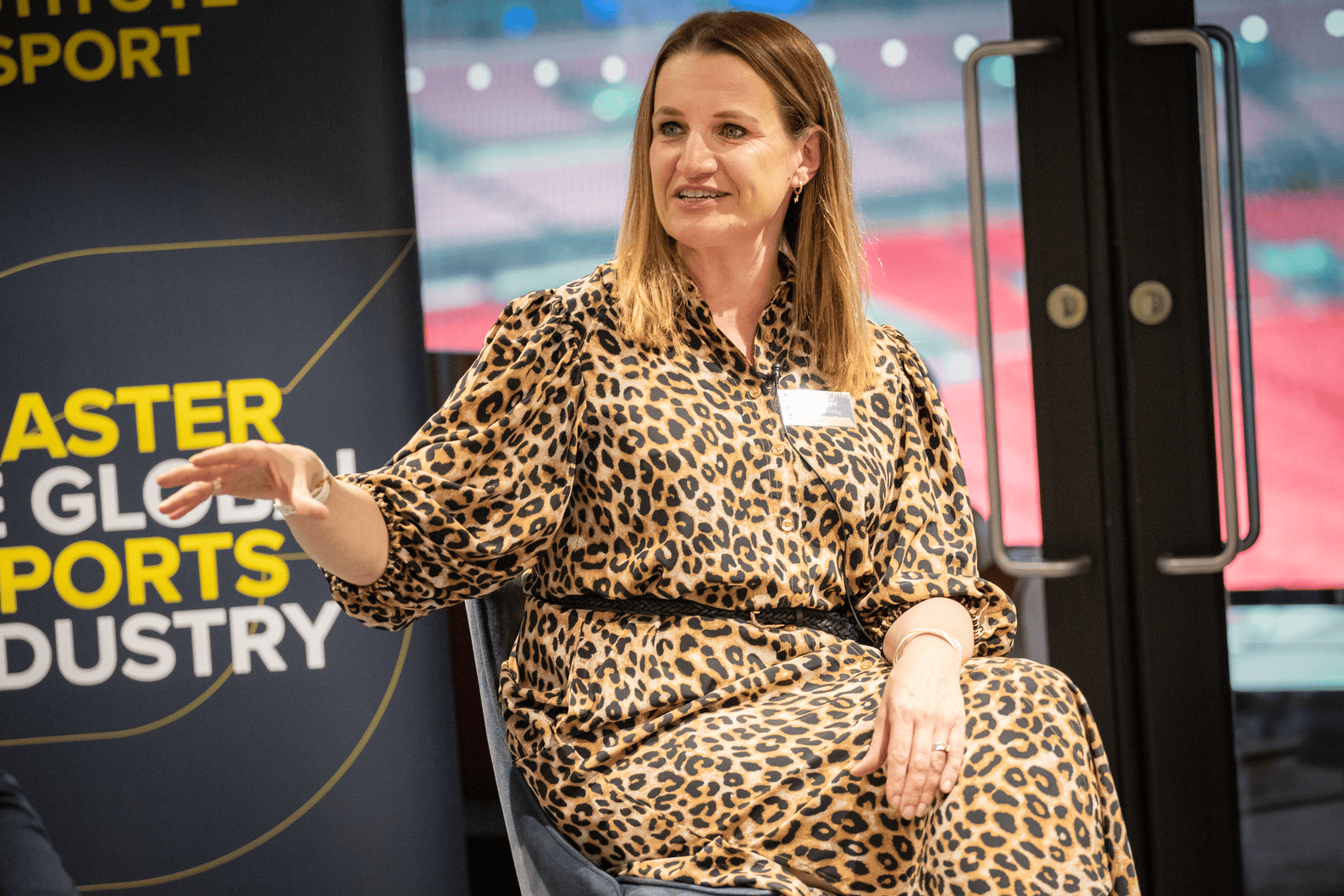
Program Leaders:

Sharona Friedman
Chief Edge Officer
President & CEO, Global Institute of Sport

Walid Hejazi
Academic Director
Professor, Economic Analysis and Policy, University of Toronto
Learn from sports industry experts:

Kathleen McGinn
Chair, Rugby Canada
Module: Governance & Ethics in Sport

Humza Teherany
Chief Strategy & Innovation Officer, Maple Leaf Sports & Entertainment
Module: AI and Technology Applications
in Sport

Tony Scholes
Chief Football Officer, Premier League & President, USL Division One
Module: Sport Leadership & Strategy

Michael Shaw
Advisor, Open Fortune (Formerly Miami Dolphins, Miami Marlins & Amazon)
Module: Marketing & Fan Engagement

Misha Sher
Global Head of Sport, Entertainment & Culture, EssenceMediacom
Module: Finance and Revenue in Sport

Chantella Perera
Group General Manager, KOJO (Former AFLW player)
Module: Sporting Event Operations
Academic Experts:

Richard Powers
Associate Professor, Organizational Behaviour and Human Resource Management, University of Toronto
Module: Governance & Ethics in Sport

Avni Shah
Associate Professor, Marketing, University of Toronto Scarborough; Academic Director, Creative Destruction Lab – Toronto, University of Toronto
Modules: AI and Technology Applications
in Sport

Elisa Zuliani
Professor, Accounting & Academic Director; Graduate Diploma in Professional Accounting, University of Toronto
Module: Finance & Revenue in Sport

Jarno Stegerman
Senior Lecturer in Football Business, Global Institute of Sport
Module: Sporting Event Operations
Walid Hejazi
Professor, Economic Analysis and Policy
Module: Sport Leadership & Strategy





Modules
Modules are delivered weekly over a 6 week period and are available on-demand.
This module provides learners with the strategic foundations needed to lead in the sport industry. It explores
how to map the sport ecosystem, apply strategy frameworks, design operating models, and build cultures that
support high performance. Learners will develop skills in growth strategy formulation, execution through OKRs
and KPIs, and leading organizational change.
Module Learning Outcomes
1. Map the sport ecosystem for a chosen organization, identifying key stakeholder groups and their
interests.
2. Analyze a sport organization’s competitive position using strategy frameworks.
3. Develop a growth strategy for a sport property using tools such as the Ansoff Matrix or Blue Ocean
Strategy.
4. Translate strategy into execution by setting OKRs/KPIs and outlining a season-long planning and
review cadence.
5. Design an operating model and leadership structure for a sport organization, justifying key choices with
a relevant framework.
6. Evaluate culture in a sport context and propose practices that support performance, innovation,
inclusion, and athlete welfare.
7. Create a simple change leadership plan using a framework (e.g., Kotter, ADKAR), including a clear
case for change and success measures.
Key Topics Covered in the Module
- The Sport Ecosystem and Competitive Landscape
- Foundational Strategy Frameworks for Sport Organizations
- Growth Strategy Formulation in Sport Organizations
- Strategy Execution Through OKRs and KPIs in Sport Organizations
- Sources of Competitive Advantage in Sport Organizations
- Operating Model and Organizational Design in Sport Organizations
- Strategic Leadership Roles in Sport Organizations: Driving Execution and Alignment
- Culture as a Strategic Lever in Sport Organizations
- Change Leadership Frameworks: Guiding Transformation and Embedding New Behaviours
- Crafting and Communicating a Compelling Change Narrative
This module examines the principles of good governance and ethical decision-making in sport organizations.
Learners will explore the role of boards of directors, fiduciary responsibilities, conflicts of interest, and
stakeholder management. The module equips learners to assess governance practices critically and navigate
ethical dilemmas with integrity.
Module Learning Outcomes
1. Explain the role and purpose of boards of directors in sport organizations.
2. Differentiate between fiduciary duty and duty of care.
3. Identify actual and potential conflicts of interest and recommend appropriate strategies for disclosure,
recusal, and mitigation.
4. Assess the governance practices of a sport organization against recognized best-practice principles
and propose concrete improvements.
5. Analyze ethical dilemmas in sport settings.
6. Map key stakeholders in a sport governance context.
Key Topics Covered in the Module
- Boards of Directors: Role, Purpose, Composition
- Fiduciary Duty and the Standard of Care in Modern Governance
- Conflicts of Interest
- Stakeholder Management in Sport Organizations
- Governance Best Practices
- Ethics in Sport Organizations
This module introduces learners to the financial foundations of sport organizations. Topics include profit and loss analysis, revenue mix optimization, sponsorship valuation, and cost management strategies. Learners will
gain the skills to assess financial sustainability and make informed capital budgeting decisions.
Module Learning Outcomes
1. Interpret a sport property’s P&L and unit economics using revenue and cost data.
2. Analyze a sport organization’s revenue mix and ticketing metrics under different demand scenarios.
3. Evaluate a sponsorship or partnership package using agreed quantitative and qualitative KPIs.
4. Assess a club’s financial sustainability using cost structure, wage ratios, and operating margin metrics.
5. Prioritize capital and cost-management initiatives using basic capital budgeting tools and financial
thresholds.
Key Topics Covered in the Module
- Profit and Loss and Unit Economics
- Revenue Mix
- Sponsorship & Partnership in the Sport Industry
- Sponsorship & Partnership in the Sport Industry
- Financial Sustainability and Cost Management
- Capital Budgeting
- Cost Management Strategies
This module focuses on building and sustaining meaningful connections between sport brands and their
audiences. Learners will explore value propositions, brand resonance, customer segmentation, and the fan
purchase funnel. The module equips learners to design integrated fan engagement campaigns that drive
measurable results.
Module Learning Outcomes
1. Define the value to the customer and the value of the customer for a chosen sport organization.
2. Assess a sport brand using a resonance lens and Aaker’s Brand Equity mode
3. Identify at least two sources of competitive advantage and differentiation for a sport team.
4. Map a basic fan purchase funnel and link key marketing tactics to each stage.
5. Outline a holistic fan engagement plan across in-stadium, digital, and off-season touchpoints.
6. Propose an integrated fan engagement campaign with clear KPIs to track results.
Key Topics Covered in the Module
- Module Overview
- Value Proposition and Value Exchange Model
- Brand Resonance
- Brand Architecture
- Brand Narrative
- Customer Segmentation
- Purchase Funnel: What, When, & Where
- Leveraging Sponsorships, Cobranding, and Local Ties
This module prepares learners to plan and deliver safe, accessible, and well-coordinated sporting events. It
covers event management planning, workforce roles and responsibilities, crowd safety models, and venue
accessibility standards. Learners will develop the operational knowledge needed to manage complex event
environments.
Module Learning Outcomes
1. Construct the foundational components of an Event Management Plan (EMP).
2. Differentiate between the critical roles, lines of authority, and specific responsibilities.
3. Define the composition, purpose, and operational function of SAG.
4. Utilize the principles of the DIM-ICE crowd safety model.
5. Apply basic principles of crowd density and flow metrics.
6. Evaluate venue design and operational practices against core accessibility standards.
Key Topics Covered in the Module
- Venue & Operations Readiness Plan
- Workforce, safety, security, and medical roles and responsibilities
- Prof Keith Still’s work regarding crowd safety
- Crowd flow calculations as stated in the Guide to Safety at Sports Grounds
- Venue accessibility from a service and safety perspective
This module explores how artificial intelligence and emerging technologies are transforming the sport industry.
Learners will examine AI applications in biomechanics, officiating, event operations, and fan engagement. The
module prepares learners to evaluate technology opportunities and develop proposals for AI-driven innovation
in sport.
Module Learning Outcomes
1. Explain key applications of artificial intelligence for athletes, coaches, ownership, event managers, and
fans across the sport ecosystem.
2. Analyze AI-enabled biomechanics and physiological performance data to draw insights about athlete
readiness and health risk.
3. Assess the competitive advantages created by AI-driven VR, in-game simulation, and wearables for
performance, resilience, and coaching decision making.
4. Evaluate the use of AI in officiating and event management with respect to accuracy, reliability, and
operational efficiency.
5. Develop a high-level proposal for leveraging AI to improve fan engagement or strategic decision
making for a chosen sport stakeholder group.
Key Topics Covered in the Module
- Overview: AI and Technology in Sport
- AI for Biomechanics, Health Monitoring, and Creating a Competitive Edge
- AI for Officiating Decisions
- Use Case of AI and VAR by FIFA
- How Sport Management and Supply Chain Management Utilize AI
Sports Leadership Lab
4-day in person experience in Toronto
The Executive Edge in Sports Leadership Lab Pathway combines the online Sports Leadership Essentials with a 4-day in-stadium Summit at BMO Field, Toronto for CA£5,350. Hosted in partnership with Rotman School of Management and Maple Leaf Sports & Entertainment, the Summit blends academic insight with hands-on access to elite sport operations.
Participants build skills in high-impact communication, strategic decision-making, and executive behaviours across elite sport, gaining confidence to lead teams and communicate with impact.
Summit highlights:
-
VIP games & behind-the-scenes stadium tours
-
Executive Presence & Negotiation masterclasses
-
MLSE panels across football, basketball, hockey, and more
-
Global networking with peers, faculty, and senior sport leaders

Sports Leadership Lab Schedule
Step into the heart of the global sports industry with a transformational experience designed to set you apart. Connect with Toronto’s leading sports innovators, tackle real-world case studies, go behind the scenes of legendary venues, and live the energy of world-class sporting events as they happen.
Welcome to Your Campus
- BMO Field Strategic Tour
Behind-the-scenes tour led by the Stadium Operations Director, focusing on stadium operations, fan experience, and venue strategy. - MLSE Executive Panel
“Building One of the World’s Leading Multi-Sport Franchises” – senior MLSE leaders from football, basketball, and hockey discuss innovation, brand integration, and cross-franchise leadership. - Capstone Group Task
Summit-long challenge briefing: “Transforming Sport Through Leadership and Innovation.” - World Cup Legacy Dinner
Hosted in the VVIP Lounge at BMO Field: “Canada 2026 & Beyond — Building a Lasting Impact,” featuring guests from the FIFA World Cup 2026 Canada Delivery Team.
Strategic Thinking & Industry Insight
- Real-World Sports Business Case Studies
GIS & Rotman faculty lead analysis of global sport business strategy and leadership decisions. Teams apply insights to their capstone projects. - MLSE Executive Lunch
Hosted lunch with MLSE leaders on “Innovation Across Franchises: What Drives Sustainable Success?” - MLSE Executive Panel & Stadium Experience
Panel with MLSE executives on innovation and commercial partnerships, plus behind-the-scenes access to activation zones. - Game Night – Toronto Maple Leafs or Raptors
Attend a live game at Scotiabank Arena, including a pre-game reception and half-time activation walkthrough.
Communicating with Impact
- Rotman Masterclass – Executive Presence: Influence in Action
Led by Rotman faculty, focusing on gravitas, authentic communication, and leadership influence. - Networking Lunch
Guided reflection on executive presence and applied leadership behaviours. - Mark Clemmit Masterclass – Commanding the Room
High-impact session on presentation and storytelling, including on-camera practice, coaching, and peer feedback. - Game Night — Toronto FC at BMO Field
VIP seating through GIS x TFC Campus, plus a Behind the Bench half-time experience with club leadership.
Leading Through Negotiation
- Rotman Masterclass – The Art of Negotiation
Half-day simulation exploring deal psychology, behavioural economics, and leadership communication. - Leadership Lab – Values-Based Leadership
GIS faculty session led by GIS President Sharona Friedman, connecting purpose, values, and strategic influence. - Closing Brunch & Capstone Presentations
Teams deliver final presentations to a panel of GIS, Rotman, and industry judges.
Admissions & Fees
Fees
*Fees will be charged in GBP (£). The CAD ($) amount shown is for guidance only, and the final amount may differ slightly due to exchange rate movements and any card or payment processing fees.
About GIS
The Global Institute of Sport (GIS) is a world-leading provider of university degree programs for the sports industry, delivering innovative online learning with access to a global network of industry leaders and elite stadium venues across the UK, US, Canada, Australia and Belgium.
GIS has a strong track record of employability and industry integration, with 99% of graduates in full-time work within nine months and 79% working in sport. In the 2026 SportsBusiness Postgraduate Rankings, GIS was ranked number one globally for career advancement and industry network, reaffirming its position as the destination of choice for ambitious professionals seeking to lead in sport.
Degrees are delivered online as part of a truly international cohort, on campus at GIS Miami, Brussels and Sydney, or in a blended distance-learning format featuring residentials in London, Miami and Melbourne, including exclusive access to iconic venues such as Wembley Stadium, Inter Miami’s Chase Stadium, Sydney Cricket Ground and the Melbourne Cricket Ground.
Students also benefit from opportunities to study, intern and work around the world, including paid internships, placements and coaching roles in the USA, Australia, Jamaica and Dubai, combining academic study with real-world professional experience.

#1 ranked UK university and online program for career advancement
SportBusiness Postgraduate Rankings 2025
#1 ranked globally for industry network
SportBusiness Postgraduate Rankings 2025
#1 ranked globally for quality of faculty
SportBusiness Postgraduate Rankings 2025
About Rotman
The Rotman School of Management is part of the University of Toronto, a global centre of research and academic excellence.
Rotman is located in downtown Toronto, one of the world’s most dynamic and culturally diverse cities and Canada’s financial, commercial and cultural capital.
The School takes full advantage of its strategic location by drawing on a rich pool of business and political leaders as teachers, mentors and speakers.
The School has deep connections to the business community, allowing it to nurture vital collaborations and career-building opportunities, and extends its impact through a global network of business and thought leaders. Rotman’s strong academic reputation and close industry connections give graduates an edge in their search for a fulfilling career through undergraduate and graduate studies, executive education and professional development.

The University of Toronto is ranked
University in Canada by Times Higher Education
Top universities in the world
2026 Times Higher Education ranking
2026 QS World University Rankings
News

Global Summits
December 10, 2024 |
GIS Global Summits: A Student Perspective
Read Post

Student Profiles
February 23, 2026 |
“Build the Career You’d be Proud to Explain to Your Kids”: Chris Jones on a Career Change to the Sports Industry
Read Post
Student Profiles
November 11, 2025 |
Step Into Elite Football Analysis: Dominic Gibson on His Journey with GIS
Read Post